


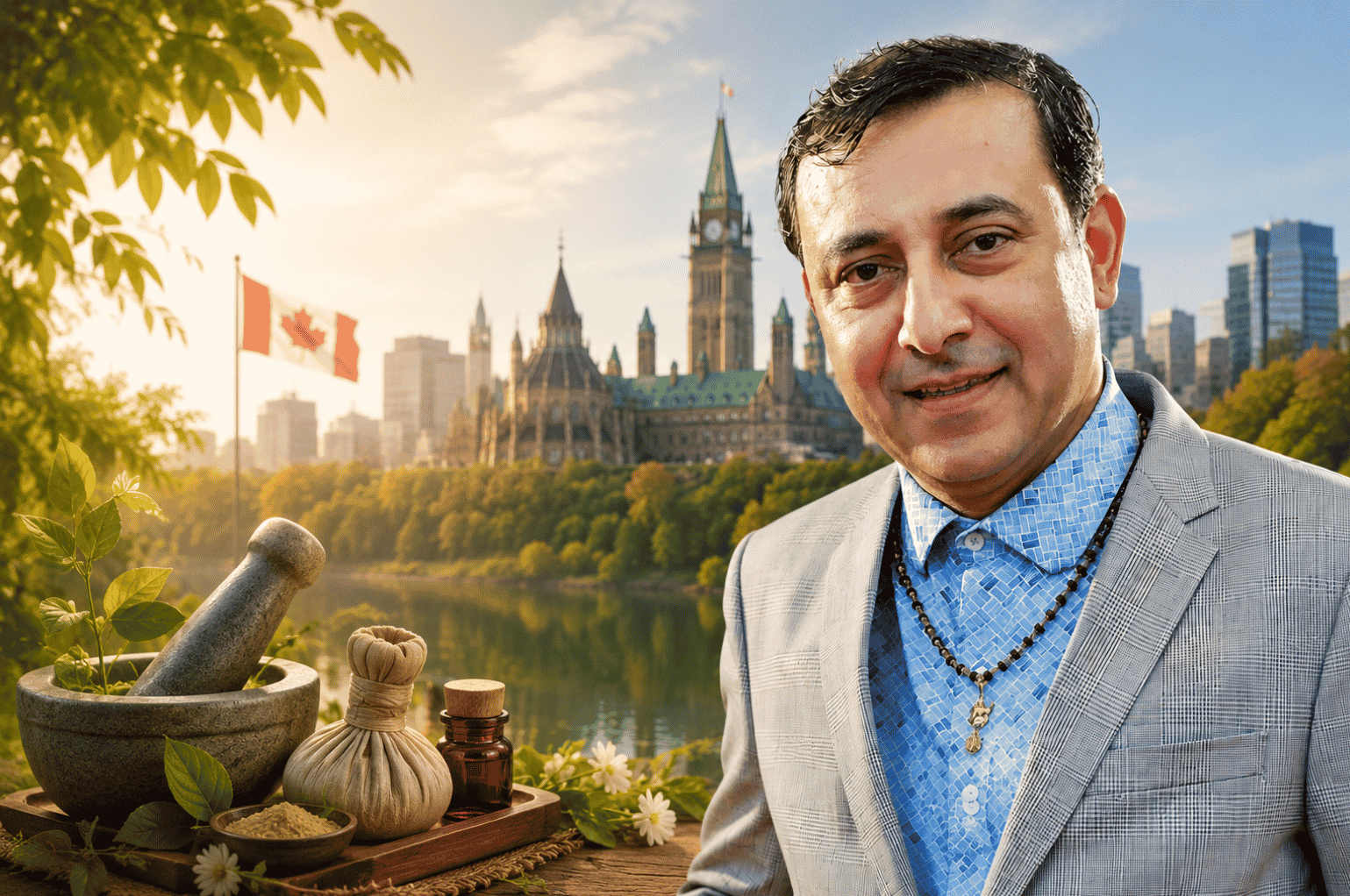
Back in 1988, when Ayurveda was virtually unknown in Canada, Dr Ramesh N Modi took a bold step. Armed with ancient Indian wisdom and modern conviction, he began introducing Ayurveda not only to Canadian citizens but also to government bodies. His efforts earned him the reputation of being a true Pioneer of Ayurveda in the country.
What started as a single practitioner’s mission soon grew into a movement. Dr Ramesh Modi guided other Ayurvedic experts to establish their own practices across North America. Over the years, Ayurveda gained a foothold in Canada—today, spas, wellness centres, and resorts openly advertise Ayurvedic therapies, herbal remedies, Indian vegetarian food, and even teas like Amla juice. Despite not being part of Canada’s healthcare or insurance system, people are willing to pay out of pocket, a sign of the trust Ayurveda has earned.

At the family-run practice, now managed by the next generation, demand is stronger than ever. Around 200–240 patients a month seek consultations—both online and in person—for issues ranging from stress and pain management to skin care, digestion, and even sexual wellness. “People are amazed by pulse assessment (Nadi Pariksha),” Dr Rakesh Modi, son of Dr Ramesh Modi, says. “It’s often their first experience of how precise and personalized Ayurveda can be.”
The consultations typically combine dietary guidance, Panchakarma therapies, high-quality herbal medicines, and wellness packages. Spiritual aspects—yoga, meditation, vegetarian diets, and even Vedic astrology—resonate deeply with Canadian and European-origin patients, many of whom turn to Ayurveda for its promise of inner peace in a fast-paced, mentally challenging world.
To further spread awareness, the family established the International Institute of Ayurveda and Complimentary Medicines Inc., offering degree and diploma courses in Ayurveda. Ayurvedic products—regulated under Canada’s Natural Product Number (NPN) system—are now widely available in clinics, health food stores, pharmacies, and online.
The COVID-19 pandemic gave Ayurveda a further boost. As people began questioning vaccine side effects and seeking natural immunity, more turned towards Ayurvedic practices. The internet has also fuelled awareness, while the Indian diaspora popularizes golden turmeric milk, masala chai, Chyawanprash, and herbal remedies among Canadian and European friends.
Challenges remain—insurance coverage is absent, scientific validation is still questioned, and certain Ayurvedic practices are restricted by regulation. But Dr Rakesh Modi believes the way forward lies in evidence-building and collaboration. “If Ayurvedic practitioners are well-trained and well-informed, they can showcase the true Ayurveda to the Western world,” he emphasizes.
After more than three decades, Ayurveda in Canada is no longer an experiment. It is a growing movement—rooted in ancient wisdom, guided by pioneers, and embraced by a society ready for holistic healing.