


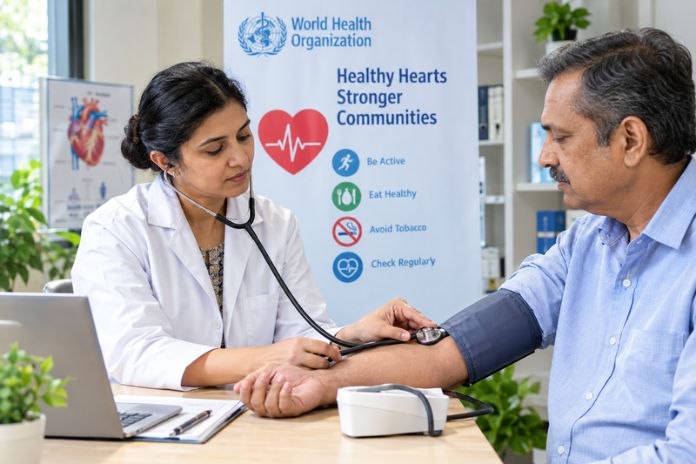
Cardiovascular diseases (CVDs) are diseases of the heart and blood vessels and remain the leading cause of death worldwide. The World Health Organization (WHO) estimated in its fact sheet updated on 31 July 2025 that 19.8 million people died from CVDs in 2022. The organisation emphasises prevention, early detection and access to suitable treatment to lessen this global health burden.
What Are Heart Diseases?
Cardiovascular diseases are a group of disorders of the heart and blood vessels. These include:
- Coronary heart disease: Diseases of the vessels supplying the heart muscle.
- Cerebrovascular disease: Diseases of the blood vessels of the brain, including stroke-related disease.
- Peripheral artery disease: Reduced blood flow through arteries to the arms and legs.
- Rheumatic heart disease: Damage to the muscle and valves of the heart that occurs after rheumatic fever.
- Congenital heart disease: Structural abnormalities of the heart present at birth.
- Deep vein thrombosis and pulmonary embolism: Blood clots in deep veins and blockage of blood vessels in the lungs.
Many strokes and heart attacks occur when blood flow to the heart or brain is blocked. A stroke can also be caused by bleeding in the brain. These are the conditions and risk factors that you must know about so that you can take preventive measures and seek timely medical care.
Global Burden of Cardiovascular Disease
WHO estimates that 19.8 million people died from CVDs in 2022, equivalent to about 32% of all deaths globally. Heart attacks and strokes accounted for about 85% of these deaths.
More than three-quarters of cardiovascular deaths occur in low- and middle-income countries, where access to early diagnosis and effective treatment may be limited.
These figures serve as a reminder that cardiovascular health is not only a clinical concern but also a public-health and development priority. Preventable illness, premature deaths and long-term care costs can affect individuals, families and healthcare systems.
Main Risk Factors: What Increases Cardiovascular Risk?
WHO identifies a number of important risk factors related to behaviour and the environment.
Risk Factors Related to Lifestyle
- Use of tobacco.
- Unhealthy diets, including excess salt, sugar and unhealthy fats.
- Insufficient physical activity.
- Alcohol use disorders.
- Obesity and overweight.
Air pollution is also an important environmental risk factor.
These factors can contribute to high blood pressure, high blood glucose and abnormal blood lipid levels. Such changes can increase the risk of heart attack, stroke and other cardiovascular complications.
Other influences include age, hereditary factors, stress, poverty and other social and environmental conditions. This means that cardiovascular risk is determined by individual circumstances and the environments in which people live.
Prevention Starts with Daily Choices and Early Detection
Many cardiovascular events can be prevented, or their risk reduced, through a combination of healthier living, early identification of risk factors and appropriate medical care.
WHO highlights a number of practical measures:
- Avoid tobacco: Do not use tobacco. If you do, seek help to quit.
- Eat a healthy diet: Choose foods low in salt and rich in fruit and vegetables.
- Stay physically active: Participate regularly in physical activity according to your health conditions and abilities.
- Limit alcohol consumption: Avoid excessive alcohol use.
- Monitor cardiovascular risk factors: Check blood pressure, blood glucose and blood lipids when appropriate.
- Manage weight: Seek professional help for weight control and other cardiovascular risk factors.
- Follow prescribed treatment: Take prescribed medication for conditions such as hypertension, diabetes and high blood lipid levels.
These steps lower the risk, but they do not guarantee that you will never develop heart disease. Other factors, such as family history and age, can also play a role in an individual’s risk.
Those who have developed cardiovascular disease may need medication, procedures, rehabilitation and continuing follow-up. Lifestyle measures should complement, not replace, clinically indicated treatment.
Spotting the Warning Signs of Heart Attack or Stroke
You can have cardiovascular disease without knowing it. Sometimes, a heart attack or stroke is the first sign of an underlying problem.
Signs of a Possible Heart Attack
Symptoms may include:
- Pain or discomfort in the middle of the chest.
- Pain or discomfort that radiates to the shoulder, neck, arms or back.
- Breathlessness.
- Nausea and vomiting.
- Faintness, light-headedness or cold sweat.
Women may be more likely than men to experience symptoms such as shortness of breath, nausea, vomiting, or pain in the back and jaw.
Stroke Symptoms You Should Know
Warning signs can develop suddenly and may include:
- Weakness or numbness of the face, arm or leg, particularly on one side of the body.
- Trouble speaking or understanding speech.
- Sudden changes in vision.
- Difficulty walking, dizziness or unsteadiness.
- A severe headache of unknown cause.
- Loss of consciousness or fainting.
Suspected heart attack or stroke is a medical emergency. Do not wait for the symptoms to go away. Seek emergency medical care immediately.
Importance of Early Diagnosis and Treatment
Blood pressure, blood glucose and blood lipids can be measured to identify people at increased cardiovascular risk. Early assessment enables healthcare providers to recommend lifestyle changes, monitor risk factors and prescribe medication where necessary.
WHO stresses that effective management depends on access to appropriate medicines, healthcare services and emergency treatment without delay. Depending on the condition, treatment may involve medication, angioplasty, bypass surgery, heart-valve procedures or other specialised interventions.
Therapy is selected according to the diagnosis and the patient’s clinical situation. There is no single intervention that works for everyone.
Role of Public Health and Healthcare Systems
Preventing cardiovascular disease is more than a matter of changing personal lifestyle. Access to primary healthcare, affordable medicines, health education, cleaner air and environments that promote physical activity can lead to better cardiovascular health.
WHO emphasises the need to integrate prevention and management into universal health coverage so that people can access essential assessment and treatment without avoidable financial hardship.
This is a reminder to healthcare professionals of the importance of early identification of risk factors and continuity of care. It also highlights to policymakers the importance of prevention programmes and equitable access to effective services.
Why This Matters for Ayurveda and Integrative Healthcare
For practitioners, researchers and students of Ayurveda, the WHO fact sheet provides an opportunity to engage with cardiovascular prevention from an evidence-informed public-health perspective.
Discussions on diet, physical activity and daily routine should be based on established prevention guidance. Any proposed Ayurvedic intervention for cardiovascular disease should be evaluated for safety, efficacy, drug interactions and suitability for the individual patient.
No sound evidence supports promoting traditional approaches as proven treatments for heart attacks, strokes or other cardiovascular diseases. Patients should not stop taking prescribed medication or delay emergency care to use traditional or complementary therapies.
Summary
Cardiovascular diseases remain a major global health challenge, but many risk factors can be addressed through prevention, early detection and appropriate medical management. WHO’s guidance highlights the combined importance of healthy living, accessible healthcare and prompt emergency response.
Improving cardiovascular health requires informed individuals, prepared health systems and ongoing public-health action.
Source: World Health Organization (WHO) – Cardiovascular Diseases (CVDs)