


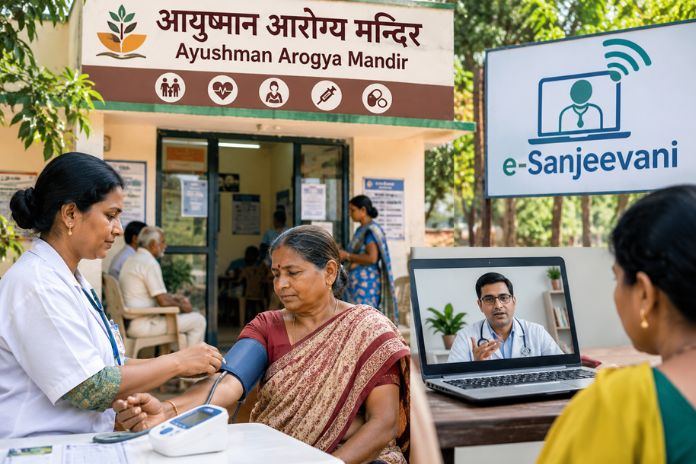
PM Narendra Modi talks about village-level wellness centers, telemedicine in Mann Ki Baat; Maharashtra boosts community outreach with village OPDs, home visits, specialist consultations
New Delhi, 7th November 2026: India’s network of Ayushman Arogya Mandirs is improving access to primary healthcare, preventive health services and digital consultations, making medical support more readily available to rural communities. Prime Minister Narendra Modi said this progress while addressing the 139th episode of his monthly radio program, Mann Ki Baat and said that nearly 1.90 lakh Ayushman Arogya Mandirs across the country are turning into wellness centers at the village panchayat level.
The Prime Minister also highlighted the role of e-Sanjeevani, India’s national telemedicine service, in helping people access medical advice without always having to travel long distances to see a doctor. The platform has facilitated around 50 crore teleconsultations, showing the increasing role of digital technology in healthcare delivery, he said.
Strengthening the community-level healthcare facilities, telemedicine and regular health check-ups are important steps for improving access to healthcare, especially in rural and geographically remote areas.
Ayushman Arogya Mandirs to Promote Preventive Healthcare
Ayushman Arogya Mandirs are meant to bring comprehensive primary healthcare closer to people’s homes as the first point of care. They also manage common illnesses, offer preventive care, health screenings, maternal and child health services, and help with managing non-communicable diseases.
By bringing health services closer to the community, these centers can encourage people to take regular check-ups, to detect potential health problems earlier and to seek appropriate medical advice.
In Mann Ki Baat, the Prime Minister noted how these facilities are increasingly becoming local wellness centers, helping communities move toward a more preventive and accessible approach to healthcare.
e-Sanjeevani Connects Patients with Doctors and Specialists
Digital healthcare is a key component of this transformation. e-Sanjeevani enables patients at participating health facilities to receive remote medical consultations including specialist advice that may not be available locally.
The platform is especially useful for people living in remote areas, island communities and places where access to specialist healthcare may involve long journeys.
During Mann Ki Baat, the Prime Minister cited examples of patients from Andaman and Nicobar Islands, Lakshadweep, Ladakh and Nagaland who received medical assistance through teleconsultations. The examples showed how digital connectivity can help local healthcare teams get expert guidance and support for timely clinical decisions.
The landmark of nearly 50 crore consultations also indicates the scale of telemedicine’s integration into India’s public healthcare delivery system.
Maharashtra Improves Healthcare Access at Village Level
Another recent initiative in Maharashtra is an example of attempts to make primary healthcare more accessible.
As per the report published by India Pharma Expo on Nov 2, 2026, Maharashtra Health Department has issued Government Resolution dated Oct 29 to strengthen the functioning of Ayushman Arogya Mandirs through scheduled village outpatient services, home visits and routine telemedicine consultations.
Under the arrangements, centers are to provide morning outpatient services at their facilities, organise village OPDs in the afternoon and home visits for patients requiring follow-up care. The program also provides for telemedicine consultations and health activities.
The Village OPDs are scheduled at accessible community centers such as Anganwadi centers, primary schools or gram panchayat offices. ASHA and Anganwadi workers are expected to help in informing the residents about the timings and venues.
The home-visit arrangements reported were geared toward people who might have difficulty travelling to healthcare facilities, such as pregnant women, newborns, young children and those requiring ongoing or palliative care.
The Government Resolution also integrates the regular use of e-Sanjeevani into the routine workflow of the centers, which enables local healthcare teams to link patients with specialist doctors remotely.
This initiative shows how stationary healthcare facilities can complement community outreach and digital consultations in the provision of medical advice to people who may otherwise have difficulty accessing it.
Linking up Digital Technology and Community Healthcare
The integration of local health care facilities, community outreach and telemedicine can help to overcome a number of barriers to access to care.
Village-level outpatient services improve access to consultations and home visits help with follow-up for vulnerable patients. Digital consultations can link local health workers with specialists, so some patients will not need to travel to distant hospitals for medical advice.
Regular monitoring of outpatient attendance, teleconsultations, referrals, home visits and medicine availability can further help health authorities to assess service delivery and identify areas which need improvement.
Success of these measures will depend on adequate staffing, reliable internet connectivity, essential medicines, diagnostic facilities and consistent implementation.
AYUSH and Holistic Wellness Opportunities
The wider expansion of community level health care also presents opportunities to improve preventive health awareness and adequate AYUSH services in public health system.
National AYUSH Mission. “To promote holistic wellness approach based on AYUSH principles and practices including Ayurveda and Yoga, the development of Ayushman Arogya Mandir (AYUSH) facilities is supported. These facilities are separate from the larger Ayushman Arogya Mandir network that provides holistic primary health care under the national health system.
“Where AYUSH services are available and permitted under relevant guidelines, appropriate integration can help support health promotion and informed access to different systems of care. Such services should function within their approved scope and with appropriate referral pathways and evidence-informed patient care.
Toward People-centred and Accessible Health Care
The spread of Ayushman Arogya Mandirs, the growing use of e-Sanjeevani and the state-level efforts to reach out to the villages with services, all point to a continuing effort to bring healthcare closer to the communities.
The message from the Prime Minister’s remarks and the reported Maharashtra initiative is that accessible healthcare is not only about infrastructure, but also about regular health services, community participation, digital connectivity and follow-up care.
As these efforts continue, the real measure of their success will be the ability to implement these consistently and provide reliable, timely and appropriate healthcare to the people across rural and urban India.



