


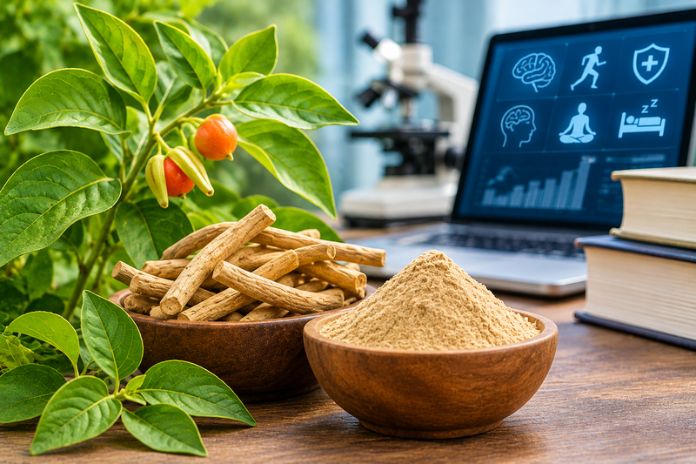
Ashwagandha (Withania somnifera): A Promising Agent Enhancing Health Longevity from Ancient Ayurvedic Herb to Modern Medicine
What Does Science Say About Ashwagandha and Its Effects on Stress, Sleep, Brain Health, Metabolism and Immunity? Taking a closer look at the traditional uses, emerging research, clinical evidence and safety considerations.
AyurWorld News (News)
Category: Ayurveda | Medicinal Plants | Herbal Medicine | Science
Introduction:
Ashwagandha (Withania somnifera) is commonly known as Indian winter cherry or Indian ginseng and is one of the most well known medicinal plants in Ayurveda. It has long been revered for its ability to restore vitality and boost strength, and has generated considerable scientific interest for its possible ability to aid the body’s response to stress, improve the quality of sleep and influence a number of biological processes that are relevant to health and wellbeing.
Over the past several years, Ashwagandha-based supplements have become popular worldwide. At the same time, its chemical constituents and possible pharmacological activities, such as antioxidant, anti-inflammatory, neuroprotective, adaptogenic and metabolic effects, have been investigated.
In March 2023, Pharmaceutics published a narrative review called “Ashwagandha (Withania somnifera)—Current Research on the Health-Promoting Activities: A Narrative Review” that examines the existing research across several health-related areas. It provides a good overview of the therapeutic potential of the plant, but also emphasises the importance of distinguishing promising experimental results from benefits proven in clinical studies in humans.
In this article we revisit the review from an evidence-informed perspective, explaining what is known at present, where scientific uncertainties still exist and why responsible use is important.
1. Ashwagandha: A Medicinal Plant with Ancient Ayurvedic Roots
Ashwagandha belongs to the family Solanaceae. It is botanically known as Withania somnifera and is indigenous to parts of the Indian subcontinent, the Middle East and North Africa.
Traditionally the roots have been the main medicinal part, but leaves and other parts of the plant have also been investigated and used in some preparations.
Ashwagandha is a Rasayana herb in Ayurvedic. Rasayana is a wide traditional concept related to nourishment, rejuvenation, resilience and maintenance of health.
It is also traditionally described in connection with:
- Balya: Traditionally used to increase strength.
- Brimhana: Building and nourishment of the body.
- Rasayana: Linked to rejuvenation and supporting wellbeing.
- Vajikarana: A classical category, concerning reproductive vigour.
These descriptions are the traditional Ayurvedic understanding. They should not be interpreted automatically as evidence of specific clinical outcomes by modern biomedical criteria.
2. Key Bioactive Components of Ashwagandha
The biological activities of Ashwagandha are due to a variety of naturally occurring plant compounds.
Its important phytochemical groups are:
- Withanolides: A group of naturally occurring steroidal lactones, widely studied for their biological activities.
- Alkaloids: nitrogenous compounds present in various plant parts.
- Flavonoids: Plant compounds that have been studied for their antioxidant properties.
- Phenolic compounds: A larger group of compounds that are associated with antioxidant properties.
- Other phytochemicals: These are compounds that could play a role in the overall pharmacological profile of the plant.
Some of the best known constituents studied in experimental research include withanolide A and withaferin A.
The concentration and composition of these compounds vary depending on the part of the plant, growing conditions, harvesting, extraction process and manufacturing method. Therefore it cannot be assumed that different Ashwagandha products have the same biological effects.
3. Here’s What the Research Says About the Health Effects of Ashwagandha:
The 2023 review includes a variety of biological and therapeutic activities. The strength of evidence varies considerably across these areas. Human clinical trials yield more direct information about potential benefits in humans, while laboratory and animal studies mainly help researchers explore mechanisms and identify areas for future investigation.
3.1 Stress, Anxiety and the Adaptogenic Activity
One of the most studied applications of Ashwagandha is stress management.
Some randomised, placebo-controlled human trials have found reductions in perceived stress and anxiety scores in those taking specific Ashwagandha extracts. Some studies have also reported a decrease in cortisol, a hormone involved in the body’s stress response.
Researchers are also investigating whether Ashwagandha affects the hypothalamic-pituitary-adrenal (HPA) axis, a system that helps regulate the body’s reaction to stress. Its studied effects may also be due to possible antioxidant and anti-inflammatory activities.
2024 systematic review and meta-analysis specifically focused on Ashwagandha for anxiety and insomnia. The trials included showed encouraging results, but the authors were clear on the limitations of the available evidence. Differences in extract composition, dosage, study duration and participant characteristics make it difficult to arrive at a single reliable recommendation.
Meaning: There is promising but not conclusive human evidence that some Ashwagandha preparations may help with perceived stress and anxiety symptoms. It is not a proven alternative to psychological therapy or a prescribed treatment for anxiety disorders.
3.2 Relaxation and Sleep Quality
Ashwagandha has been traditionally associated with soothing and revitalising effects. Recent papers have discussed the effect of supplementation on sleep onset, sleep duration and overall sleep quality.
Clinical trials have shown some improvement in selected sleep measures, especially in people who have trouble sleeping. Researchers have suggested that stress reduction and possible effects on sleep-related biological pathways may be involved.
But most of the studies have been small and of short duration. The results do not establish Ashwagandha as a treatment for chronic insomnia, sleep apnoea or other diagnosed sleep disorders.
3.3 Cognitive Function and Neuroprotective Potential
The 2023 review also looks at research on memory, learning, attention and protecting nerve cells.
In vitro studies suggest that some components of Ashwagandha may influence oxidative stress, inflammatory pathways and other processes important for brain cell function. Improvements on selected cognitive measures have been reported in some human studies.
The results are scientifically intriguing but much of the neuroprotective evidence is based on laboratory and animal research. It’s not enough to conclude Ashwagandha prevents dementia, Alzheimer’s or other neurodegenerative conditions.
More carefully designed human studies are necessary to assess whether the observed effects translate into meaningful improvements in everyday cognitive functioning.
3.4 Antioxidant and Anti-inflammatory Activities
Oxidative stress and inflammation involve a number of biological processes and are associated with several chronic health conditions.
Ashwagandha contains withanolides and other phytochemicals that have been studied for antioxidant and anti-inflammatory effects. Their effect on inflammatory mediators and signalling pathways such as NF-κB and MAPK has been investigated in experimental studies.
These findings may help to explain some of the biological activities reported in preclinical research. But changes in laboratory markers don’t always translate into clinical benefits.
At this time, Ashwagandha is not available as a proven treatment for chronic inflammation, autoimmune or other inflammatory conditions.
3.5 Diabetes and Metabolic Health Studies
The review discusses experimental investigations on potential antidiabetic activities such as glucose regulation, oxidative stress and metabolic pathways.
Some studies indicate that the constituents of Ashwagandha may affect biochemical pathways related to the metabolism of glucose . But evidence from laboratory and animal experiments cannot prove that the herb safely controls blood glucose in people with diabetes.
There is limited clinical evidence and Ashwagandha should not replace diabetes medication, dietary management or medical monitoring. People taking glucose-lowering medicines should speak with their healthcare professional about taking it as an additional glucose-lowering effect may have a potential impact on the safety of treatment.
3.6 Heart Health
Researchers have explored possible cardioprotective properties of Ashwagandha including its role in oxidative stress, inflammation and other mechanisms associated with cardiovascular function.
Some early results are encouraging, but they do not prove Ashwagandha prevents heart attacks or strokes or cardiovascular disease. There is also insufficient evidence for treating hypertension or abnormal cholesterol levels to support routine therapeutic recommendations.
3.7 Reproductive and Endocrine Health
As a traditional herb of vitality, ashwagandha has been studied for male reproductive health, sperm parameters, and hormone-related outcomes.
Some human studies have reported changes in selected reproductive measures and testosterone levels among specific groups of participants. They’ve also considered its potential impact on thyroid hormones.
However, these results should be interpreted with caution. They do not mean that Ashwagandha is a proven treatment for infertility, erectile dysfunction or hormonal disorders. If you have a thyroid condition or are taking medication for your thyroid, it can affect thyroid function, so you should consult a medical professional.
3.8 Antimicrobial and Anticancer Studies
Laboratory studies were conducted to investigate the effect of Ashwagandha extracts and individual withanolides on the growth of selected microorganisms and cancer cells.
Some experimental results indicate antimicrobial activity and effects on cell pathways connected to cancer. These observations may help to identify compounds for future pharmaceutical research.
But cell and animal experiments are the earliest stage in scientific research. They do not prove Ashwagandha can treat infections, prevent cancer or cure cancer in humans. It is not intended to replace prescribed antimicrobial therapy, cancer treatment or other necessary medical care.
4. Is Ashwagandha Safe? Important Things to Know
Ashwagandha is a traditional medicinal plant, but just because it is natural does not mean that every preparation is safe for every person.
According to clinical trials, Ashwagandha is generally well tolerated for short periods. However, adverse effects have been reported and some safety issues require particular attention.
4.1 Frequently Reported Side Effects
Common mild side effects of include:
- Pain in the stomach
- Diarrhoea or watery stools
- Vomiting and nausea
- Sleepiness or drowsiness
The frequency and seriousness of side effects may depend on the formulation, dose, duration of therapy and individual response.
4.2 Risk of Liver Injury
A big safety issue is the chance that Ashwagandha could damage the liver.
There are reports of adverse liver effects after using supplements containing Ashwagandha in the medical literature, but it seems these are rare. Symptoms can include:
- Jaundice (yellowing of the skin or eyes)
- Dark coloured urine
- Continuing nausea or vomiting
- Uncommon tiredness or weakness
- Bellyache
- Loss of appetite, itching
A 2026 scoping review analysed 13 publications that identified 25 reported patients with suspected Ashwagandha-associated liver injury. The most common reported cases were of jaundice and pruritus and most patients recovered after discontinuing the product and taking proper care. Serious outcomes were reported, especially in people with advanced liver disease as an underlying condition.
People with liver disease, especially advanced chronic liver disease or cirrhosis, should avoid Ashwagandha unless specifically advised by a specialist. Anyone experiencing potential symptoms of liver injury should stop taking the supplement and seek immediate medical attention.
4.3 Effects on Thyroid and Hormone Function
Some studies have indicated Ashwagandha might affect thyroid hormone levels. Also there have been reports of excessive thyroid activity in persons taking Ashwagandha preparations.
This is particularly important if you have thyroid issues or are taking thyroid medication. Medical supervision is recommended before considering supplementation.
Ashwagandha may also affect testosterone levels in some study populations. People with hormone-sensitive prostate cancer are advised to discuss its use with their specialist doctor.
4.4 Pregnancy and Lactation
Ashwagandha is generally not recommended for use during pregnancy and breastfeeding due to lack of safety data and concerns about possible reproductive effects.
Also, people who are planning pregnancy should refer to a professional before taking herbal supplements with Ashwagandha.
4.5 Possible Interactions with Medicines
Ashwagandha can interact with some medications, such as:
- Medicines to control blood glucose
- High blood pressure medicines
- Drugs and sedatives that make you sleepy
- Immunosuppressive drugs
- Thyroid hormone replacement
- Some medicines used to control convulsions
Those on regular medication must consult a qualified healthcare professional before beginning the use of Ashwagandha. Interactions should be considered before adding it to a treatment regimen.
These safety considerations are in line with guidance from the US National Institutes of Health Office of Dietary Supplements.
5. What Is New Science Bringing to the Table?
The narrative review published in 2023 is a general overview of the research on Ashwagandha available at the time of the publication. Additional studies have expanded on what we know, especially in terms of its possible benefits for stress and sleep, as well as its safety profile.
5.1 Evidence of Anxiety and Sleeplessness
A 2024 systematic review and meta-analysis evaluated randomised controlled trials of Withania somnifera for anxiety and insomnia. Its pooled analysis included five trials with 254 participants.
The authors noted improvements in anxiety scores and select sleep measures, including sleep-onset latency, total sleep time, sleep quality, and sleep efficiency. However, the analysis also found a lot of variation between studies and the authors called for larger trials to confirm the findings.
This is an important distinction: a statistically significant result in a small set of trials does not automatically translate into a treatment recommendation for the broader population.
5.2 Safety of Standard Root Extracts
In 2026, a systematic review was conducted on the safety and tolerability of standardised Ashwagandha root extracts (single-ingredient) in healthy adults.
There were 23 studies and 2,317 participants. Doses ranged from 125 to 600 mg/day and duration of intervention ranged from a single dose to 180 days.
The authors found no clinically meaningful adverse changes in the major liver, kidney, blood, endocrine and cardiovascular biomarkers measured in the studies included. Mild adverse events such as gastrointestinal discomfort, headache and temporary drowsiness were reported rarely.
But the review also noted that there is no evidence beyond 180 days and more research is needed due to variations in study design and reporting of adverse events.
These findings are relevant for the standardised root-only extracts and for generally healthy populations included in the review. These should not be taken as evidence that all Ashwagandha products are safe to use long-term, or for people with pre-existing medical conditions.
5.3 Why Safety Findings Should Be Interpreted Together
The 2026 systematic review of standardised root extracts and the 2026 scoping review of reported liver injury are on different research questions.
- Review of clinical trial data from a subset of healthy adults on certain standardised products. The second reviews clinical reports of suspected liver injury.
Together they illustrate an important principle in the research of herbal medicines: a preparation may be well tolerated in controlled studies with selected participants, while uncommon adverse reactions may be seen in wider populations.
The product composition, plant part, individual susceptibility, duration of use and underlying health conditions all matter.
6. Ashwagandha in Ayurveda: Connecting Traditional Knowledge to Modern Evidence
Ashwagandha is a well-established component of the Ayurvedic materia medica. Its traditional uses are seen from the broader perspective of a person’s constitution, age, ability to digest, strength, lifestyle and general health.
Its classification as a Rasayana is reflective of the traditional focus on nourishment, rejuvenation and maintenance of well-being.
Modern research has investigated several biological activities that may account for some of the traditional interest in this plant. These may affect stress-related pathways, sleep, oxidative processes and inflammatory signalling.
However, traditional concepts and findings from biomedical research should not be considered interchangeable. Laboratory observation of a biological mechanism does not independently confirm a traditional therapeutic claim, nor does traditional use of a herb establish the clinical effectiveness of every modern supplement containing that herb.
Hence, the responsible integration of Ayurveda into modern health care should be aimed at:
- Proper botanical identification and authentication.
- Correct selection of plant parts and preparations.
- Quality assurance and standardisation of herbal products.
- Assessment of personal and vocational counselling.
- Monitoring of side effects and interactions with drugs.
- Adequately designed clinical trials evaluating both efficacy and safety.
This approach can be useful for the scientific evaluation of Ayurvedic medicinal plants in their traditional context.
7. Current Research Limitations and Future Directions
Ashwagandha is a topic of increasing interest, yet many scientific questions remain unanswered.
Variation in preparations Different studies use root extract, root and leaf extract, whole root powder and formulations. They don’t necessarily have similar chemical make-up.
Differences in study design: Laboratory experiments, animal models, and human clinical trials represent different levels of evidence. They should not be put in the same pot as if they offer the same degree of clinical benefit.
Small and short duration clinical trials: Many human studies are small and short in duration. This limits conclusions about long-term effectiveness and safety.
Uncertainty about dosage: Various preparations and doses have been used in studies. The dose used in one clinical trial cannot be automatically applied to another product.
Incomplete understanding of adverse effects: There is a need for more systematic monitoring to identify uncommon adverse reactions, susceptible populations and possible interactions.
Future research must address large, well designed randomised controlled trials, well characterised extracts, standardised outcome measures, longer follow-up and transparent reporting of adverse events.
8. Summary
Ashwagandha (Withania somnifera) is a major medicinal plant with a long history of use in Ayurveda and an increasing amount of modern scientific research.
Mikulska and collaborators published a 2023 narrative review describing potential health-promoting activities of it, including adaptogenic, sedative, neuroprotective, antioxidant, anti-inflammatory, metabolic, reproductive and antimicrobial activities.
There is some encouraging human clinical evidence in the areas that have been studied for stress reduction and sleep quality. Other proposed benefits, especially those related to cardiovascular health, diabetes, cancer and neuroprotection, are at earlier stages of investigation or require stronger clinical confirmation.
Safety is just as important. Ashwagandha can potentially cause liver injury, affect thyroid function, interact with medicines and there is a lack of adequate long-term safety data. Just because ashwagandha is a traditional herb, it should not be assumed to be universally suitable.
The scientific evaluation of Ashwagandha is a good example of the need to combine traditional knowledge with rigorous research, product quality assurance and responsible clinical practice. Further quality studies are needed to help define its appropriate role in modern health care.
SOURCE LUNK: Pharmaceutics. 2023 Mar 24;15(4):1057. doi: 10.3390/pharmaceutics15041057 https://pmc.ncbi.nlm.nih.gov/articles/PMC10147008/



