


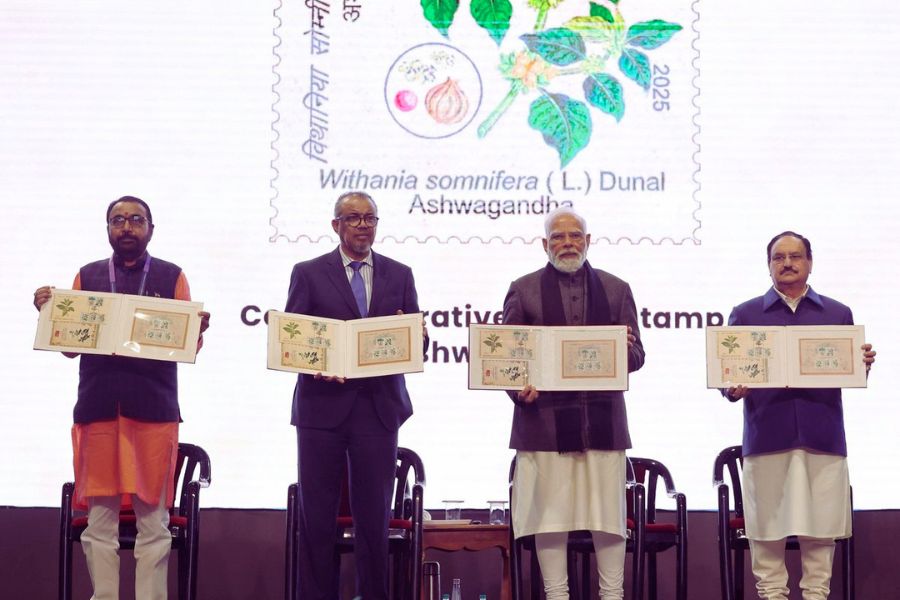
For centuries, Ashwagandha has stood as one of Ayurveda’s most trusted pillars—quietly effective, deeply studied, and widely used. Its recent entanglement with regulatory scepticism in parts of the West, therefore, raises questions that go far beyond a single herb. This cover story by Eashwar K P examines not only the science, the markets, and the contested evidence surrounding Ashwagandha, but also the deeper fault lines in how Ayurvedic healthcare knowledge system is evaluated in a globalised healthcare regime. At stake is a larger conversation about fairness, evidence, and the future of integrative medicine itself.
Ashwagandha (Withania somnifera) has been revered in India for thousands of years for its medicinal properties. Deeply embedded in classical Ayurvedic texts and practice, it is widely used for its adaptogenic, restorative, and rejuvenative benefits. In several European countries, however, Ashwagandha has recently come under regulatory scrutiny, facing significant hurdles for a variety of reasons.
The trigger for this shift can be traced to a 2020 report by the Technical University of Denmark (DTU) titled Risk Assessment of the Root of Withania somnifera. For Ayurveda practitioners and manufacturers, the developments came as a bolt from the blue.
The response from the Ministry of Ayush, Government of India, has been measured yet marked by clarity of intent and institutional maturity. Through its premier R&D body, the Central Council for Research in Ayurvedic Sciences (CCRAS), the Ministry issued a point-by-point rebuttal in a detailed dossier titled Safety of Ashwagandha: Report of the Expert Committee. The publication systematically addressed each concern raised by the DTU. More recently, CCRAS released Ashwagandha: Safety Dossier 2.0, further strengthening the scientific arguments in favour of the herb. Such official responses speak for themselves.
Meanwhile, scientific evidence supporting Ashwagandha continues to accumulate. PubMed, the free online database of biomedical and life sciences literature, currently hosts more than 1900 research publications related to Ashwagandha. If you search Withania, more than 2000 articles are found. In Web of Science, another database, more than 3400 articles are found.
Significantly, a dedicated session on Ashwagandha was held on 15 December 2025 at the 2nd WHO Global Summit on Traditional Medicine, where eminent experts deliberated on the subject. The very inclusion of such a session sent a strong and unmistakable signal to the global community.
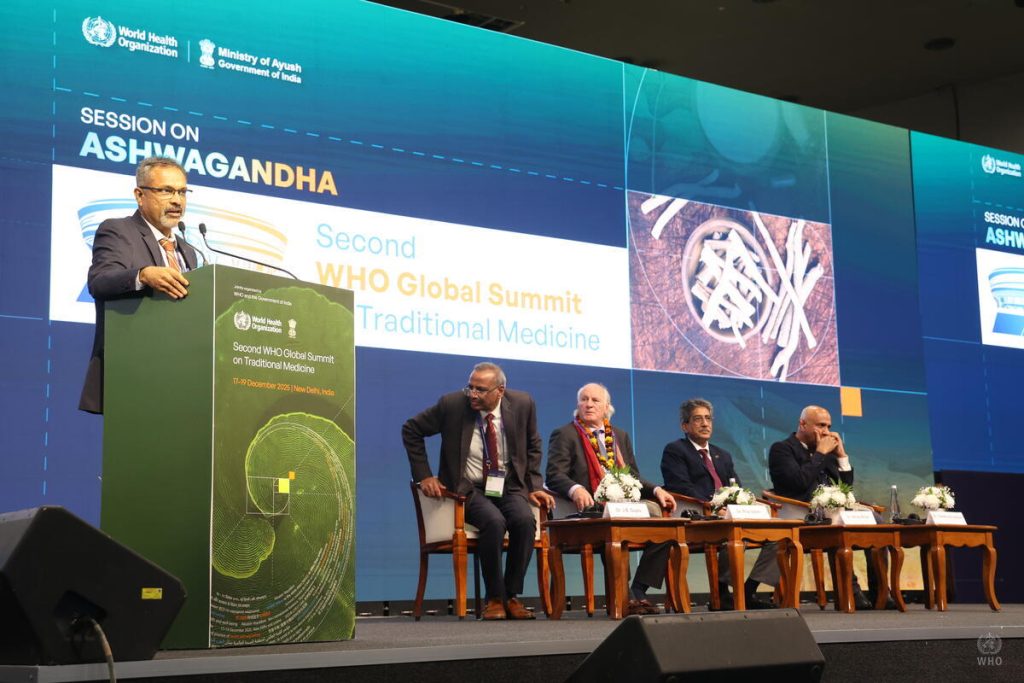
| A session dedicated to Ashwagandha at the WHO Summit on Traditional Medicine. |
Despite the debate and regulatory actions in parts of Europe, Ayur World finds that a large section of the general public remains unaware of the issue. Even among students and young professionals within the Ayurveda fraternity, understanding is often peripheral—despite the fact that the long-term implications of these developments will affect them most directly.
Against this backdrop, Ayur World makes an earnest attempt to present the facts as they stand today, with the objective of bringing all stakeholders onto the same page. What follows is a concise overview of the background, the core issues, the responses thus far, and the way forward.
Background
References to the medicinal use of Ashwagandha abound in classical Ayurvedic literature as well as in contemporary global sources. Ancient Indian medical wisdom consistently prescribes only the root of Ashwagandha for therapeutic formulations—a principle of critical significance that recurs throughout this narrative.
During the Covid-19 pandemic, global consumption of Ashwagandha rose sharply, particularly in Europe, where it was increasingly marketed as a food supplement for its adaptogenic and immune-supporting properties. While the pandemic familiarised the world with the concept of immunity, the term adaptogen remains less understood. Simply put, adaptogens help the body cope with stress, reduce anxiety, improve sleep and insomnia-related conditions, and support physical performance and recovery.
Market data reflects this surge in popularity. Studies project the European Ashwagandha market to reach USD 21.40 million by 2029, growing at a compound annual growth rate (CAGR) of over 11 percent between 2022 and 2029. Products currently in circulation include root-based formulations, leaf-based products, and combinations of root and leaf. This distinction is crucial, as classical Ayurvedic texts clearly recommend only the root for medicinal (internal) use. The leaves were used topically only, not internally.
The North American market presents an even more striking picture. In 2024, its size was estimated at USD 721.5 million, with projections placing it at USD 1.53 billion by 2033, at a CAGR of 8.8 percent, as per American Herbal Pharmacopoeia. These figures originate from a market survey conducted by Nutrition Business Journal.
The commercial success of Ashwaganda worldwide may have triggered resistance in certain quarters. At least, that’s what a few people that Ayur World spoke to, in the Ayurveda sector speculate. While such speculation cannot be entirely dismissed, Ayur World treats it as conjectural rather than evidence-based.
These observations do not negate the need for rigorous scientific scrutiny of traditional medicines. They do, however, underline the importance of consistency and balance in regulatory approaches – issues that merit the attention of healthcare regulators worldwide.
Issues Raised by DTU and Immediate Reactions
In 2020, DTU raised five primary safety concerns regarding Ashwagandha, which ultimately led to its ban in Denmark in 2023.
These concerns were:
- Potential negative impacts on sex hormones in men and women, including the risk of inducing abortion
- Stimulation of the thyroid gland, potentially leading to thyrotoxicosis in extreme cases
- Potential adverse effects on the immune system
- Possible liver injury
- Potential impacts on the central nervous system
Caught off guard by the DTU report, India’s Ministry of Ayush, the World Ashwagandha Council, and several scientific experts responded strongly, raising serious objections to the report’s methodology and conclusions.
Key criticisms included:
- Heavy reliance on animal and in vitro studies, with conclusions drawn largely from studies on leaves, stems, and berries rather than the root
- Inadequate search strategy, selective reporting, limited databases and search terms, and disproportionate emphasis on negative findings
- Disregard for substantial clinical evidence and centuries of documented traditional use
- Misinterpretation of several studies
- Absence of a rigorous peer-review process
- Exclusive focus on risks, with complete omission of documented benefits
The counter-dossier observed that “banning Ashwagandha roots based on the toxicity of leaves or berries is akin to banning apples because their seeds contain amygdalin, a precursor to cyanide.” Viewed dispassionately, the analogy is not without merit.
Beyond these methodological critiques, hundreds of scientific papers published before and after 2020 have addressed and countered the DTU’s claims point by point. It’s all in the public domain and one can easily get the details on the Internet. Rather than revisiting those specifics, this story seeks to highlight a larger, more systemic issue affecting Ayurveda and other traditional medicine systems worldwide—the absence of a genuine level-playing field.
The DTU report is a classic case of ‘citation distortion’. By applying the toxicity of berries and leaves to the medicinal root, they have ignored three millennia of safe human use. Our response through Dossier 2.0 is not just defensive; it is a scientific imperative to correct the record.
Dr Bhushan Patwardhan, Ayush Chair
The Elusive Level-Playing Field
The dominance of what is commonly termed ‘modern medicine’ is undeniable, as reflected in market data. The global pharmaceutical industry is projected to grow from USD 1.7 trillion in 2024 to USD 2.3 trillion by 2030. In contrast, the global AYUSH industry, though growing at a healthy pace, is expected to reach about USD 200 billion by 2030 from approximately USD 50 billion today. Ayurveda accounts for roughly 72 percent of the AYUSH sector. The data is taken from Statista https://www.statista.com; https://www.ibef.org; and http://www.mordorintelligence.com.
Even the term modern medicine is a relatively recent construct. The gradual shift from the label ‘allopathy’ to ‘modern medicine’ has been viewed by many as a carefully calibrated repositioning in an increasingly technology-driven world.
In this context, a remark by Dr Mohanan Kunnummal, radiologist and Vice-Chancellor of the Kerala University of Health Sciences and the University of Kerala, is noteworthy. Speaking at the 10th World Ayurveda Congress in Dehradun in 2024, he observed that any medical system that employs modern healthcare technologies qualifies as modern medicine. By that definition, Ayurveda too qualifies, given its adoption of contemporary tools and its engagement with developments in physics, chemistry, biosciences, and emerging fields such as artificial intelligence.
The question of a level-playing field surfaces repeatedly when regulatory actions are examined. The contrast in responses is striking:
- In the United States, leading experts have highlighted systemic issues in modern medicine itself, including high mortality linked to medical errors and adverse drug reactions.
- In a recent Indian case involving deaths linked to a contaminated cough syrup, regulatory action was swift and targeted—against the specific manufacturer and product. The entire category of cough syrups was not banned.
- Antimicrobial resistance (AMR) poses one of the gravest challenges to modern medicine today, yet the response remains evolutionary rather than prohibitive. No regulator has proposed banning antibiotics altogether.
Such latitude, however, is rarely extended to traditional medicine systems. In the case of Ashwagandha, a blanket ban based on disputed evidence stands in sharp contrast to how risks in modern medicine are addressed.
There are countless such instances, many of which never become subjects of sustained debate. Ashwagandha, however, has been thrust into the spotlight.
One is compelled to ask: is a level-playing field for Ayurveda merely elusive—or is it being denied by design?
When regulation ignores evidence, it deprives the public of safe remedies. The Danish ban lacks proportionality; we do not ban all fruit because some seeds contain cyanide. We must move toward an integrative framework where ‘modern’ and ‘traditional’ are not opposing forces.
Dr Antonio Morandi, Ayurvedic Point, Italy
Conclusion: Where Do We Go from Here?
Present evidence. Then present more evidence. And then, still more.
For now, that remains the only path available – often before regulatory bodies where a genuinely level playing field either does not exist or, if it is claimed to, is not visibly apparent in practice. This is the reality Ayurveda confronts today.
Does this demoralise or demotivate those who believe in Ayurveda’s efficacy and relevance in contemporary healthcare? To an extent, yes. Honesty demands that this be acknowledged. Yet, paradoxically, these very challenges have also strengthened the resolve of Ayurveda’s global community, reinforcing its determination to stand firm for what it knows, practises, and experiences every single day.
Transparency is the antidote to scepticism. We focus on root-only, full-spectrum extracts because that is what the science and the texts dictate. Quality control from seed to shelf is the only way to ensure Ashwagandha remains a staple in global wellness.
Mr Karthikeya Baldwa, CEO, Ixoreal Biomed/KSM-66
Do such developments provoke Ayurveda practitioners into going hammer and tongs against practitioners of modern medicine? Absolutely not. On the contrary, the dominant belief within the Ayurveda ecosystem is that both systems can – and should – coexist, and more importantly, complement each other for the greater good of public health. For an ailing patient seeking relief and recovery, healing remains paramount; the labels attached to systems of medicine matter far less in that moment of need.
Is there, nevertheless, a quiet fear within the Ayurveda fraternity that other prominent medicinal plants could face similar vilification in the near future? The answer is an unequivocal yes. There is a palpable anxiety that Ashwagandha may not be an isolated case. Conversations with senior industry leaders, clinicians, and researchers reveal a subdued but persistent concern that other widely used medicinal plants could also come under regulatory fire. While rarely articulated in public forums, this apprehension was candidly expressed by several stalwarts of the Ayurveda sector during discussions with Ayur World.
At the same time, the entire episode mirrors a familiar framework from change management theory. Ayurveda’s contemporary journey closely follows the classic stages of transition. While enduring the stages of scepticism by responding to repeated regulatory setbacks, Ayurveda today has firmly stepped on to the stage of acceptance. This acceptance is anchored in the growing recognition – by people across cultures and geographies – of Ayurveda’s efficacy, resilience, and enduring relevance as a living, evolving healthcare tradition.
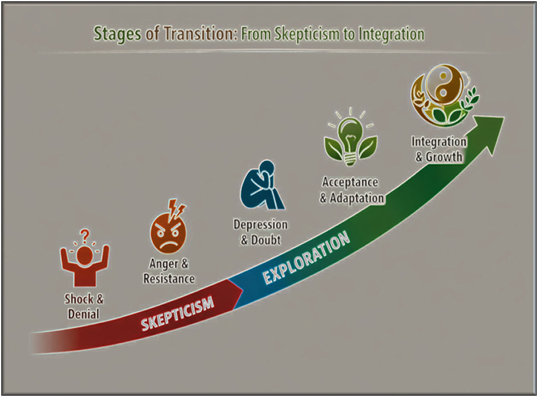
Conceptual representation [ek1] of Ayurveda’s transition from scepticism to integration, adapted from established change-management and transition models (Kübler-Ross; Bridges; Lewin).
The next stage of true integration into the modern global healthcare landscape no longer appears distant or unattainable. With sustained evidence-building, transparent dialogue, and equitable regulatory engagement, integration is not a question of if, but when.
And when that moment arrives, it may well redefine not just the future of Ayurveda, but the very idea of integrative healthcare worldwide
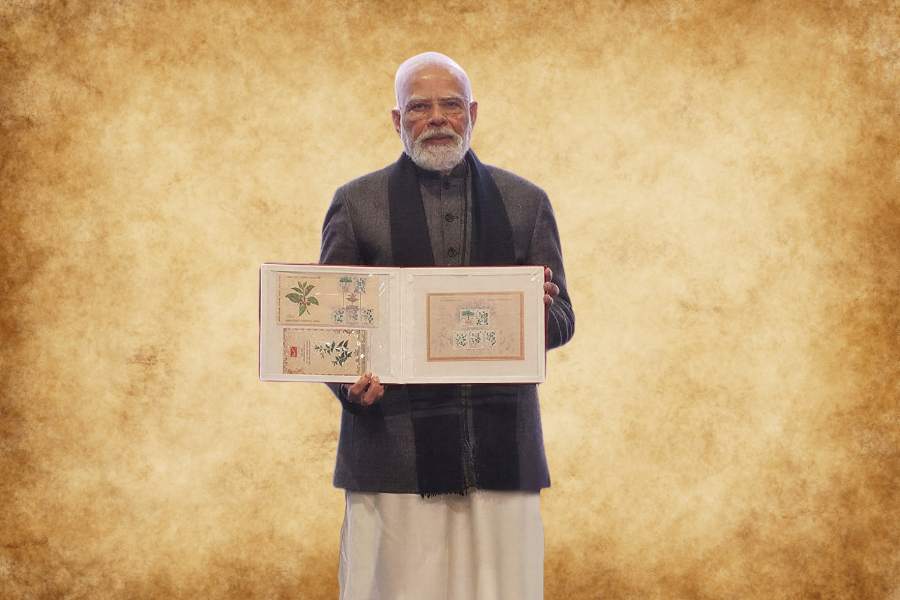
PM Modi Releases Ashwaganda Stamp
During the valedictory session of the 2nd WHO Global Summit on Traditional Medicine on 19 December 2025, Prime Minister Narendra Modi released a commemorative postal stamp on Ashwagandha, one of Ayurveda’s most iconic medicinal plants. The moment was rich in symbolism, but its significance extended far beyond the ceremonial.
If viewed in the context of Ashwagandha (Withania somnifera) facing growing regulatory scrutiny in parts of the West in recent years, the release of the stamp carried a quiet yet powerful assertion: India stands firmly behind its traditional knowledge systems and the botanicals that have sustained them for centuries.
The timing of the announcement, at a WHO summit dedicated to traditional medicine, underscored India’s commitment to evidence-based integration of traditional systems into global healthcare frameworks. It reaffirmed that India is not merely preserving Ayurveda as heritage, but actively advocating for its rightful place in modern public health discourse, supported by research, regulation, and global cooperation. For Ayurveda practitioners, researchers, manufacturers, and policymakers, the stamp served as a reassurance and a rallying point. It signalled national resolve to protect, promote, and scientifically validate Ayurveda on the world stage, while engaging constructively with global regulatory and scientific institutions.
The restrictions imposed on Ashwagandha in certain European countries, particularly Denmark, raise serious concerns. These decisions, based on a 2020 assessment, does not comprehensively evaluate Ashwagandha’s long-standing safety record or its diverse functional properties. Since then, hundreds of scientific publications and safety dossiers have emerged, reaffirming the herb’s safety and therapeutic value. Ignoring this growing body of evidence reflects a lack of scientific rigor and risks creating unjustified non-tariff barriers to traditional medicine systems. India firmly believes that regulatory decisions must be evidence-based, transparent, and reflective of both traditional usage and contemporary science.
Vaidya Rajesh Kotecha, Secretary, Ministry of Ayush, Government of India