


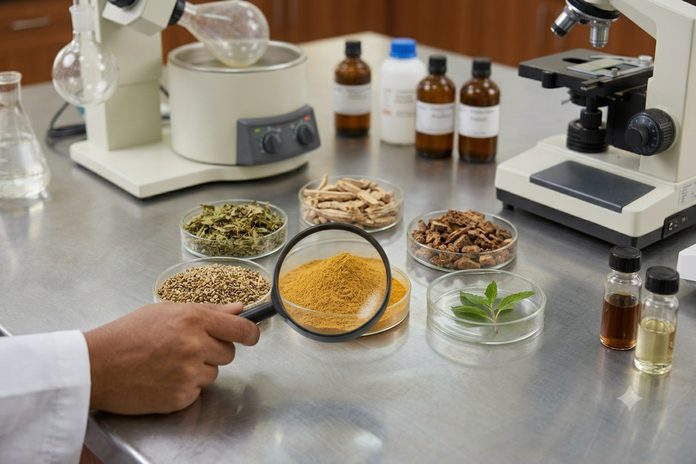
The Journal of Drug Research in Ayurvedic Sciences (JDRAS), an official peer-reviewed publication of the Central Council for Research in Ayurvedic Sciences (CCRAS), provides a platform for research on Ayurvedic drugs, medicinal plants, pharmaceutical sciences and related fields. Published under the Ministry of Ayush, the journal contributes to the dissemination of research on traditional Indian systems of medicine.
What Is JDRAS?
JDRAS is an open-access, peer-reviewed journal published in print and online by CCRAS, Ministry of Ayush, Government of India. CCRAS supports multidisciplinary research in Ayurveda and related areas of traditional medicine and interdisciplinary health sciences, with a primary focus on Ayurveda.
The journal has been published online since 2017 and follows a bimonthly publication schedule. Its scope is particularly relevant to researchers working on Ayurvedic medicines, pharmaceutical development, medicinal plants and the scientific evaluation of traditional knowledge.
Major Research Areas Covered by JDRAS
JDRAS covers a wide range of research areas in Ayurvedic drug sciences. These include:
- Drug development and pharmaceutical research in Ayurveda.
- Dravyaguna, Rasa Shastra and Bhaishajya Kalpana.
- Basic and applied drug research.
- Plant chemistry.
- Drug standardisation and quality control.
- Pharmacognosy.
- Pharmacological and toxicological studies.
- Biochemistry.
- Molecular biology and biotechnology.
- Medicinal plant research.
- Local health traditions and ethnomedicine.
- Medicinal plant surveys and cultivation.
This broad scope supports research across different stages of Ayurvedic drug investigation, from medicinal plant identification and laboratory research to standardisation and evaluation of formulations.
Evidence in Ayurvedic Drug Research
Research published in JDRAS reflects scientific work conducted within CCRAS and its network of researchers.
Among its pharmacological publications, CCRAS lists a study of Hridayarnava Rasa, an Ayurvedic formulation. Research on the formulation in an experimentally induced atherosclerotic cardiovascular disease model was published in JDRAS in 2024.
CCRAS also lists earlier JDRAS research on the antidiabetic activity of Ficus gibbosa extracts in an experimental animal model. These publications illustrate the range of research undertaken in preclinical Ayurvedic pharmacology.
Importantly, findings from laboratory experiments or animal studies do not automatically establish effectiveness in humans. Different levels of scientific evidence answer different research questions, and appropriate clinical evidence is needed when assessing the safety and efficacy of treatments for patient care.
Recent JDRAS Publications
CCRAS newsletters indicate that JDRAS has continued to publish issues and special editions.
The 2025 publications mentioned in the available information include:
- January–February 2025, Volume 10, No. 1.
- March–April 2025, Volume 10, No. 2.
- September–October 2025, Volume 10, No. 5.
- A special issue on Ayush Ahara.
- A special issue titled “Obesity – Holistic and Scientific Approaches to Obesity Management.”
These publications demonstrate the journal’s continuing role in disseminating research on Ayurvedic drugs, health research and related subjects.
Importance of JDRAS for Ayurvedic Research
Scientific research is an important part of understanding traditional healthcare systems. A dedicated journal such as JDRAS provides researchers with a platform to communicate findings on Ayurvedic medicines, medicinal plants, pharmacology, standardisation and pharmaceutical research.
Such publications can also provide access to emerging research findings and methodological approaches for Ayurveda researchers and students. Peer-reviewed research can contribute to discussions about evidence generation, quality standards and the responsible development of traditional medicines.
Individual studies must nevertheless be interpreted according to their design, methodology and level of evidence. Publication in a scientific journal does not, by itself, prove that an Ayurvedic medicine is effective for treating a particular disease.
What Researchers and Students Should Know
JDRAS may be relevant to:
- Postgraduate Ayurveda students and researchers.
- Pharmacognosy and pharmaceutical science researchers.
- Medicinal plant researchers.
- Researchers in pharmacology and toxicology.
- Scientists working on Ayurvedic drug standardisation.
- Scholars studying traditional medicine and interdisciplinary health sciences.
- Professionals following developments in Ayurvedic drug research.
Researchers who wish to submit manuscripts or access journal material should consult the official journal information and author guidelines rather than relying solely on third-party summaries.
JDRAS is one of several research publications associated with CCRAS. Others include the Journal of Research in Ayurvedic Sciences (JRAS) and the Journal of Indian Medical Heritage (JIMH).
CCRAS also conducts research in clinical studies, pharmacology, drug standardisation, medicinal plants and other areas of Ayurvedic science. Its research publications cover subjects including pharmacology, safety assessment, medicinal plants and clinical research.
What Readers Should Know
JDRAS is a research journal, not a patient treatment guide. Readers should distinguish between traditional knowledge, preclinical findings, research observations and clinically established evidence.
Anyone considering Ayurvedic medicine for a health condition should seek appropriate professional medical advice rather than relying solely on an individual research paper or journal article.
Conclusion
The Journal of Drug Research in Ayurvedic Sciences continues to serve as a CCRAS platform for publishing research related to Ayurvedic drugs, medicinal plants, pharmaceutical sciences and interdisciplinary health research.
Its research publications and special issues reflect ongoing efforts to document and investigate Ayurveda through structured scientific research. The significance of individual findings depends on the quality of the research and the strength of the available evidence.