


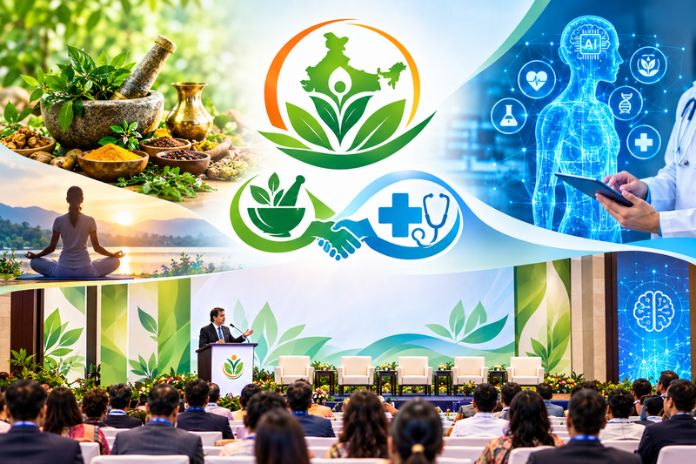
New Delhi, 29 October 2026: New Delhi, October 28: The Times Network India Health Summit 2026, which brought together policymakers, clinicians, researchers and healthcare industry leaders, discussed key themes including bolstering ayurveda research, examining the integration of traditional and modern medicine, and increasing healthcare access.
The Blueprint for a Future-Ready Healthcare Ecosystem: Innovation, Access, Self-Reliance was the theme for the third edition of the summit that discussed several healthcare priorities like artificial intelligence (AI), precision diagnostics, fertility treatment, cancer care, mental health, preventive healthcare and rural health access.
For the AYUSH sector, discussions included the need for stronger research, more investment and evidence-based approaches to integrating traditional medicine into the wider healthcare system.
Focus on Integration of AYUSH and Scientific Research
The key session, “From Tradition to Therapeutics: The New Science of AYUSH,” discussed the role of Ayurveda in India’s healthcare landscape, and the challenges and opportunities in its integration with modern medicine.
The discussion was headed by Dr Biswaroop Roy Chowdhury, founder of BRC Clinics Health and Dr Tanmay Goswami, founder of Goswal. Topics covered scientific research, clinical applications, funding for AYUSH sector and the need to evaluate traditional treatments through appropriate research.
In the discussions, the need for investment for strengthening the sector of traditional medicine and for expanding its research facilities was also underlined.
The integration of different medical systems requires the careful assessment of specific treatments, with decisions based on patient safety, clinical evidence and professional judgement
Union AYUSH Minister calls for evidence based collaboration
The Union Minister of State (Independent Charge) for AYUSH and Minister of State for Health and Family Welfare, Mr. Prataprao Jadhav, spoke at the summit on the theme of bridging AYUSH and modern medicine.
The minister stressed on exploring the collaboration between traditional and modern health care systems in India with emphasis on scientific evidence, patient safety and clinical judgement, ET Now said.
The minister also mentioned the World Health Organization’s Global Traditional Medicine Strategy 2025-2034, stating that India has an opportunity to contribute to global discourse on traditional medicine, research, safety and regulation.
His comments highlighted the need for collaborative approaches to healthcare, without losing the right clinical assessment or patient safety.
Artificial Intelligence and Precise Diagnosis
AI and emerging technologies were among the summit’s major themes. A session, “Precision Diagnostics: AI, Genomics and the New Era of Personalised Care”, discussed the impact of technological developments on diagnostics and personalised care.
The panel included Dr Arjun Dang, CEO and partner, Dr Dangs Lab, Dr Manish Vaish, Medanta, Noida and Dr Belal Bin Asaf, director, Institute of Chest Surgery, Chest Onco-Surgery and Lung Transplant, Medanta, Noida.
Discussions centred around AI, genomics and advanced diagnostic technologies and their use in healthcare.
Reproductive Health Care and Fertility
Fertility care was another major focus, with specialists talking about reproductive technologies, fertility preservation, treatment costs, and the social stigma around infertility.
The Fertility Revolution: Reimagining Parenthood in Modern India brought together specialists from leading hospitals and fertility centers, including Dr Ranjana Sharma, Dr Vimal Grover, Dr Hrishikesh Pai and Dr Abha Majumdar.
The discussion emphasised the need for good information on treatment options, realistic expectations of in vitro fertilisation (IVF) and greater recognition of male infertility.
Women’s Health and Cancer Care
Cancer care and women’s health featured prominently in the summit’s program.
The session, “Take Charge Together: Shaping a Future of Greater Breast Cancer Awareness and Better Outcomes,” looked at breast cancer treatment, chances of recurrence, mental health, and the challenges patients may face after treatment.
Speakers spoke about the need to address the financial and social burdens of cancer and concerns about body image, relationships and quality of life.
The summit also featured sessions on menopause, reproductive health and fertility preservation, reflecting the increasing focus on holistic women’s healthcare at various stages of life.
Mental Health and Preventive Health Care
The mental health discussions were on suicide risk, screen addiction, geriatric mental health and de-addiction strategies.
The discussion on liver health also covered lifestyle practices in daily life, including eating patterns and their potential impact on health. The wider program also looked at longevity, health ageing, muscle health and prevention of lifestyle related conditions.
Improving Access to Rural Healthcare and Public Health Systems
The session, “Reengineering Public Health Infrastructure: Last-Mile Delivery, Digital Health Equity, and Rural Access,” brought together healthcare professionals and industry representatives to discuss public health infrastructure, digital health and healthcare delivery models.
The discussion centred on how to improve access to medical services and to close gaps in healthcare delivery.
Strengthening last mile healthcare access remains critical to ensure people in underserved communities are able to avail appropriate consultations, diagnostic services & treatment.
Creating a Research-led Healthcare Ecosystem
The Times Network India Health Summit 2026 covered a wide spectrum of priorities from advanced medical technology and specialised care to public health infrastructure and preventive healthcare.
Regarding Ayurveda and AYUSH, the discussions revolved around the need for investment, scientific research, proper clinical evaluation and constructive engagement with the larger healthcare system.
More collaboration between researchers, academic institutions, health professionals, policymakers and industry stakeholders could help to identify areas for further investigation and strengthen the evidence base for traditional medicine.
As India strives for a more accessible and future ready healthcare ecosystem, the challenge will be to strike a balance between innovation and affordability, scientific rigour and patient-centric care.