


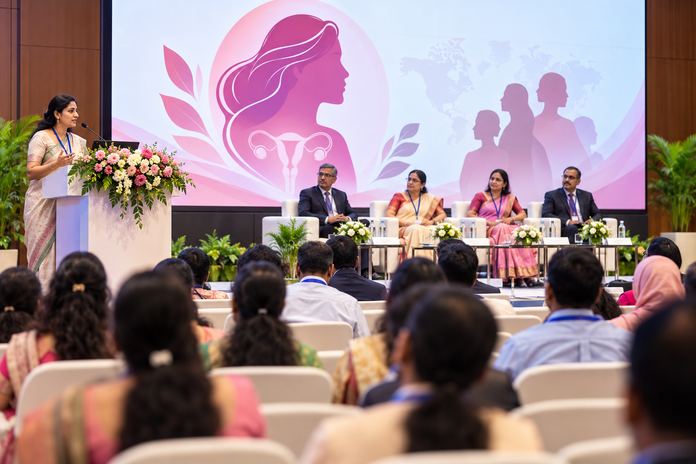
Varanasi, October 2026: Banaras Hindu University (BHU) organised PRASUTICON-2.0 – the 7th Annual International Conference on Clinical & Research Advancement in Women’s Health: From Text to Practice from 7 to 9 October 2026.
The conference was organised by the Department of Prasuti Tantra, Faculty of Ayurveda, Institute of Medical Sciences (IMS), BHU, in collaboration with the UP Chapter of KAGOF and KAGOF National. It aimed to bring together clinicians, researchers, academicians and students to discuss developments in women’s health, Ayurveda and clinical research.
PRASUTICON-2.0 Focuses on Women’s Health Research
The three-day programme included a pre-conference workshop on 7 October, followed by the international conference on 8 and 9 October 2026.
The conference theme was “Clinical & Research Advancement in Women’s Health: From Text to Practice.” The programme explored ways to connect classical Ayurvedic knowledge with contemporary clinical practice and scientific research.
According to the event announcement, the conference aimed to promote evidence-based research and innovation in Prasuti Tantra and Stree Roga, the Ayurvedic disciplines concerned with obstetrics, gynaecology and women’s health.
Connecting Classical Ayurveda and Contemporary Practice
The conference focused on exploring connections between classical Ayurvedic knowledge and modern clinical research.
The organisers identified several objectives, including promoting research and innovation, encouraging interdisciplinary collaboration, and supporting safe, patient-centred approaches to maternal and women’s healthcare.
The programme also aimed to provide a platform for clinicians, researchers, academicians and students from India and abroad to exchange knowledge and discuss emerging areas in women’s healthcare.
The theme “From Text to Practice” reflects an effort to explore how knowledge described in classical Ayurvedic texts can be studied, assessed and appropriately applied in modern healthcare settings.
Main Topics Discussed
The conference programme covered a range of clinical and research issues related to women’s health.
The announced subthemes included:
- Advances in clinical research and diagnostics.
- Marma, Jalauka, Agni and Viddha Karma in the clinical practice of Stree Roga.
- Stree Roga and Prasuti Tantra, including Panchakarma and Sthanik Chikitsa.
- Updates and protocols in obstetric and gynaecological emergencies.
- Garbha-sanskar and epigenetics.
- Legal issues in Ayurvedic practice.
- Artificial intelligence in research and clinical practice.
- Holistic interventions in Stree Roga through performing arts.
The programme brought together classical Ayurvedic approaches and contemporary topics such as clinical research, diagnostics, artificial intelligence and clinical guidelines.
Practical Demonstrations at the Pre-Conference Workshop
A one-day pre-conference workshop was organised at BHU on 7 October 2026.
The workshop included demonstrations and sessions on procedures and approaches used in women’s healthcare. The announced programme included laparoscopic-assisted hysterectomy, non-descent vaginal hysterectomy, and sessions on Viddha Karma, Agnikarma and Marma Chikitsa in Stree Roga.
The workshop was designed as a practical component to complement the scientific conference programme.
Research Presentations and Scientific Sessions
The conference included scientific sessions, panel discussions, research presentations and keynote lectures.
The event announcement also featured a Best Thesis Award and a panel discussion on lifestyle, menstrual health practices, age at marriage and reproductive life-course factors in relation to conditions including dysmenorrhoea, endometriosis and fibroids.
Research presentations provided participants with opportunities to present and discuss work related to women’s health and Ayurveda.
Participation and Reported Conference Highlights
The programme was designed for a broad educational and professional audience, including clinicians, academicians, researchers, postgraduate and undergraduate students, and other professionals interested in women’s healthcare.
According to the post-event report published during the conference, more than 560 participants, including those attending the pre-conference workshop, were involved. The report also cited:
- 27 resource persons.
- 26 keynote speakers.
- 208 research-paper presentations.
- Approximately 70 posters.
- Seven plenary sessions.
- 24 scientific sessions.
- Three poster sessions.
These figures are reported by the event coverage and should be understood as organiser or event-report figures rather than independently audited attendance statistics.
Promoting Evidence-Based Ayurveda
A recurring theme of PRASUTICON-2.0 was the importance of connecting Ayurvedic knowledge with systematic research and contemporary healthcare practice.
The conference programme emphasised scientific research as a means of examining traditional knowledge and identifying areas for appropriate clinical application.
For healthcare communication, an important distinction remains: presentations at a scientific conference do not automatically establish the clinical effectiveness or safety of every Ayurvedic intervention discussed. Individual therapies and practices require appropriate scientific, clinical and regulatory evaluation.
Institutions Behind the Conference
The conference was hosted by the Department of Prasuti Tantra, Faculty of Ayurveda, Institute of Medical Sciences, Banaras Hindu University, in association with the UP Chapter of KAGOF and KAGOF National.
The programme was listed in the official BHU event calendar as taking place from 7 to 9 October 2026.
The Faculty of Ayurveda at IMS-BHU is involved in Ayurveda education, research and healthcare. Through this conference, the Department of Prasuti Tantra brought attention to issues concerning women’s health and reproductive healthcare.
Why Is PRASUTICON-2.0 Important?
Women’s health needs attention at different stages of life, from reproductive health and menstrual disorders to pregnancy, childbirth and conditions affecting later life.
Conferences that bring together clinicians, researchers and students can provide a forum to discuss research findings, clinical experiences and emerging approaches. The emphasis on connecting classical Ayurvedic knowledge with contemporary research also reflects wider discussions about the evidence-based development of traditional medicine.
The international scope of PRASUTICON-2.0 provided a platform for professionals to discuss research and clinical practice in women’s health from different perspectives.
Conclusion
PRASUTICON-2.0 brought the Ayurveda and healthcare community together in Varanasi to discuss clinical and research advancement in women’s health. Organised at Banaras Hindu University from 7 to 9 October 2026, the programme included a practical pre-conference workshop, scientific sessions, research presentations, keynote lectures and discussions on classical Ayurvedic approaches and contemporary healthcare topics.
The conference highlighted the importance of research, interdisciplinary dialogue and careful evaluation when exploring how traditional knowledge may be translated into appropriate contemporary clinical practice.