


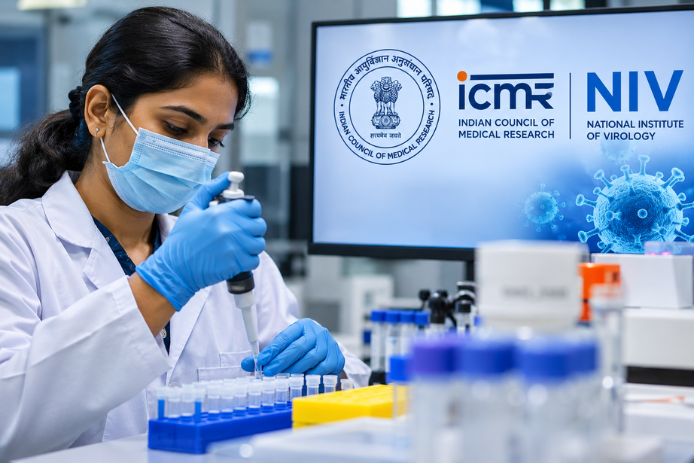
Pune, 16 October 2026: The Indian Council of Medical Research–National Institute of Virology (ICMR-NIV), Pune, stressed the importance of scientific innovation, preventive medicine and affordable healthcare in the curtain-raiser programme for the Emerging Science, Technology and Innovation Conclave (ESTIC) 2026.
The program was centred around the theme “Preventive Medicine and Advanced Healthcare Solutions” and gathered scientific experts and media representatives to address the importance of emerging technologies in tackling public health challenges. The initiative also stressed the need for translating biomedical research into practical healthcare solutions.
ESTIC 2026 is about Innovation in Healthcare
ESTIC 2026 was held at Bharat Mandapam, New Delhi from 27th to 29th October. The conclave was held on the broad theme “Creative Minds, Catalysing Science, Empowering Technologies” with an objective to strengthen collaboration across the India’s science, technology and innovation ecosystem.
The healthcare thematic session focused on preventive medicine and advanced healthcare solutions, bringing scientific research and technological innovation into the discussions on public health.
ICMR-NIV focuses on research, diagnostics and vaccines
The welcome address on behalf of ICMR-NIV Director during the curtain-raiser programme was delivered by Dr Pragya Yadav, Scientist F, ICMR-NIV, Pune and Director-in-Charge, National Institute of Occupational Health (NIOH), Nagpur.
She emphasised the significance of translating biomedical research into practice, reinforcing diagnostic networks and supporting the development of public health policies based on evidence.
The work of the ICMR-NIV in virological research, outbreak investigations, diagnostics and vaccine development was viewed as a vital component of the broader endeavour to strengthen India’s healthcare preparedness.
Collaboration of Ministries and Research Institutions
Dr Ruchi Singh, Scientist G and Head, Discovery Research at ICMR, highlighted the collaborative approach behind ESTIC 2026. The conclave brought together the efforts of 13 ministries to foster scientific exchange, technological development and collaboration across the research ecosystem.
Dr. Krushna Ch. Sahoo, Scientist D, ICMR-DHR and Member Secretary of the thematic session presented the overview of the conclave and its objectives.
An interactive session with media representatives was also a part of the programme, which provided a platform to discuss the relevance of scientific and technological innovation to healthcare and public health.
AYUSH ministry stresses combining traditional and modern medicine
Dr A Raghu, Adviser, Ministry of AYUSH stressed on the integration of traditional and modern medicines for strengthening healthcare research and innovation.
This perspective is significant in the AYUSH sector, where research collaborations, proper scientific evaluation and development of healthcare solutions can assist in informed discussions on the role of traditional systems in the larger healthcare framework of India.
The programme concluded with the vote of thanks, which was given by Ms. Anshika Bhatanagar, Joint Statistical Adviser, Ministry of AYUSH and Co-Chair of the thematic session.
From Scientific Research to Affordable Healthcare
The emphasis on cutting-edge and affordable healthcare underlines the need to ensure that scientific progress can be translated into tangible public health benefits. Research progress in diagnostics, vaccines and preventive medicine can contribute to healthcare preparedness, provided that innovations are properly assessed and disseminated through effective implementation.
But the curtain-raiser announcement did not include detailed funding commitments, measurable affordability targets or a final implementation roadmap. Any such developments should be verified by later official announcements.
The programme identified an opportunity for continued dialogue between traditional medicine institutions, biomedical researchers and policymakers for Ayurveda and other AYUSH stakeholders. The potential contribution of such a collaboration is contingent on the research questions addressed, the quality of evidence generated and the appropriate application of the findings.



