


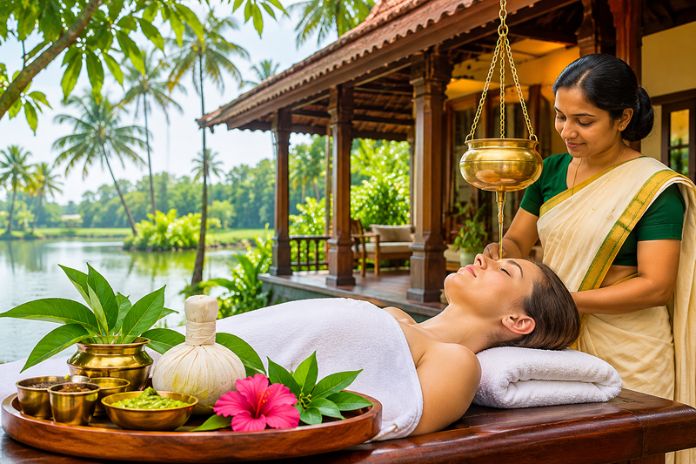
Kerala is a major destination for international wellness tourism and scientific validation, patient safety and conservation of medicinal plants are still top priorities.
India’s ancient system of Ayurveda is receiving increasing international attention with wellness retreats across Kerala witnessing rising interest among visitors looking for holistic healthcare, preventive wellness and traditional healing experiences. The growth in demand is part of a wider global trend in lifestyle wellness and traditional healthcare.
According to a report published by France 24, quoting Agence France-Presse (AFP), Ayurveda-based wellness centers in Kerala are attracting visitors from countries, including the United Kingdom and Switzerland. These visitors are looking for customised wellness programs that combine traditional therapies, dietary practices, herbal preparations, massage, meditation and yoga.
Kerala Consolidates Its Position In Global Ayurveda Tourism
Kerala is today one of the leading destinations in India for Ayurveda-based wellness tourism. Its traditional healthcare practices, availability of medicinal plants, experienced practitioners and established wellness infrastructure have added to its international appeal.
The Rajah Ayurveda group has been part of this burgeoning sector for nearly three decades and runs four wellness retreats in Kerala. Its programs combine contemporary diagnostic methods with traditional Ayurvedic principles to provide individualised care, the report said.
Another place that draws international visitors is the Nattika Beach Resort. Such centers offer wellness programs that include traditional oil therapies, diet modifications, massage, meditation and yoga.
The report included interviews with overseas visitors who discussed their own experiences of a heightened sense of well-being and relaxation after staying at these retreats. Their experiences reflect the growing interest in Ayurveda as a part of lifestyle and wellness tourism.
Ayurveda’s Emphasis on Individualised Medicine
Ayurveda has an individualistic approach to health considering the constitution, lifestyle, diet, environment and other factors of a person.
According to Ayurveda, the balance of the three doshas, Vata, Pitta and Kapha is the secret of health. Treatments and lifestyle advice are usually selected based on individual assessments.
Wellness programs may include herbal remedies, therapeutic massage, specific diets, poultices, meditation and yoga, the report mentions.
The practitioners interviewed also stressed the necessity of evaluating individuals holistically, rather than just focusing on individual symptoms.
Global Interest Points to Need for Scientific Evidence
The issues related to scientific validation of specific treatments still remain significant, despite increasing popularity of Ayurveda based wellness tourism.
The World Health Organization (WHO) has highlighted the need to strengthen scientific evidence for traditional medicine, while ensuring patient safety, appropriate regulation and quality standards.
Geetha Krishnan, attached to research at the WHO Global Traditional Medicine Center in Jamnagar, cited Ayurveda’s individualised approach that takes into account factors such as the person’s environment, seasons, diet and daily routine, among its advantages.
The increasing international interest offers an opportunity to strengthen research, clinical documentation, standardisation and evidence based practices in Ayurveda.
Increasing Worry on Conservation of Medicinal Plants
The rise of ayurveda also points to the need to protect the natural resources on which traditional medicine depends.
Ayurveda employs hundreds of medicinal plants and herbs in its formulations and therapeutic practices. The report notes that there are an estimated 800 to 900 plants used in medicine, although this number changes according to the regional tradition.
However, urbanisation, population growth and climate change are increasing pressure on medicinal plant resources. Some species are becoming harder and harder to find in the wild, experts have warned, while others are in danger of extinction.
Therefore, for the long-term sustainability of the Ayurvedic sector, it would be important to strengthen medicinal plant conservation, sustainable cultivation, biodiversity protection and responsible sourcing.
Ayurveda’s Growing Role in India’s Wellness Economy
The growing trend of Ayurveda retreats is also adding to the India’s medical value travel and wellness tourism sectors.
According to a study by the Research and Information System for Developing Countries (RIS) published by the Ministry of Ayush, India’s Ayush services sector was estimated at US$ 36.92 billion in FY 2024-25. The sector has witnessed a compound annual growth rate of 16.91% since FY 2022-23.
The study also identified wellness services such as yoga centers, spas and Ayush-based resorts as key drivers for the growth of the sector.
India has come up with a separate Ayush Visa framework to make it easier for foreign visitors to come in for treatment under traditional Indian systems of healthcare.
Making Ayurveda more globally credible.
The growing international demand for Ayurveda presents major opportunities for Indian practitioners, wellness institutions, researchers and the tourism industry. Kerala is well positioned to benefit from this development, with its existing Ayurveda infrastructure and traditional knowledge base.
However, sustainable international development will depend on upholding professional standards, securing patient safety, bolstering scientific research, enhancing quality assurance and safeguarding medicinal plant biodiversity.
As Ayurveda gains traction with wellness seekers across the globe, a strong foundation of credible research, responsible healthcare delivery and sustainable methods will be crucial for establishing its long-term international reputation.



