


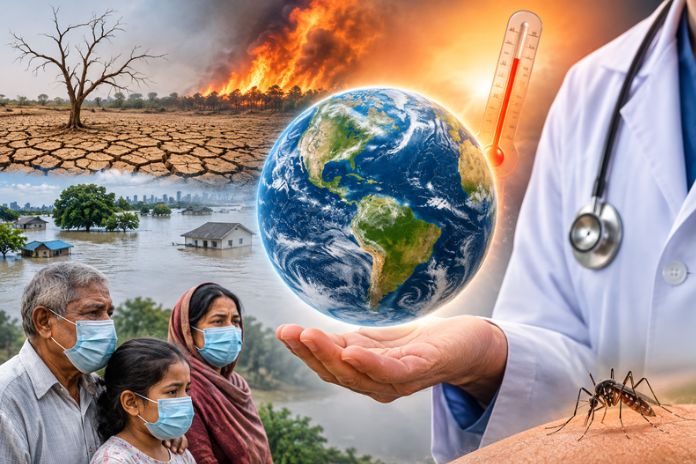
Climate change is no longer only an environmental issue. It is a growing threat to human health. “Rising temperatures, extreme weather events and environmental disruption are affecting access to clean air, safe drinking water, nutritious food and healthcare, according to the World Health Organization (WHO). Its climate change and health program calls for stronger public health systems, climate adaptation and joined-up international action.
Climate Change: A New Public Health Challenge
Climate change means a change in the long term temperature, rainfall patterns and other aspects of the climate. Global warming is caused by human activities, especially the burning of fossil fuels such as coal, oil and natural gas.
According to WHO, climate change threatens the environmental and social conditions needed for good health. It impacts food production, water availability, sanitation, housing, livelihoods and access to healthcare, in addition to raising temperatures.
The WHO projects that climate change alone could cause an additional 250 000 deaths per year from undernutrition, malaria, diarrhoea and heat stress between 2030 and 2050.
The projected direct economic damage in health terms could be US$2-4 billion per year by 2030. These projections underline the need for climate policies and development planning to include health considerations.
What Is the Impact of Climate Change on Human Health?
Health effects of climate can be direct, indirect or long-term. Some of these happen right away as a result of extreme weather events. Others happen more slowly because of changes in ecosystems, food systems and living conditions.
1. Heatwaves and heat illness
Higher temperatures and extended heat waves can lead to dehydration, heat exhaustion and heatstroke.
The cardiovascular and respiratory systems are also put under added stress by extreme heat. Older adults, children, outdoor workers and those with pre-existing health conditions are especially vulnerable. Heat stroke is a medical emergency that needs immediate medical attention.
WHO warns of increasing occupational, environmental health hazard of extreme heat
2. Infectious and vector-borne diseases
Changes in temperature, rainfall and humidity can alter the geographic distribution and seasonal activity of disease-carrying organisms.
Malaria and dengue are important examples of mosquito-borne diseases. Environmental changes may provide favourable conditions for breeding and transmission in some areas.
Waterborne infections can also be aggravated by flooding and poor sanitation.
But climate change is only one factor affecting how diseases are transmitted. Public-health infrastructure also plays an important role, as does urbanisation, sanitation, population movement and disease-control programs.
3. Food Security and Under-Nutrition
Droughts, floods and changing rainfall patterns due to climate may affect agriculture and food production.
Such disruptions may impact:
- Availability of healthy food.
- Agricultural livelihoods and crop productivity.
- Prices of foodstuffs and household purchasing power.
- Diet diversity and nutrition security.
“Disruptions to food systems can increase the risk of undernutrition, especially among children, pregnant women and economically vulnerable communities.
4. Water Scarcity and Waterborne Disease
Safe drinking water is important to human health. Climate change can affect water availability through drought, changes in rainfall patterns and extreme weather events.
Flooding can pollute drinking water supplies with sewage, chemicals and harmful microorganisms. Poor sanitation and unsafe water increase the risk of diarrhoeal diseases and other infections.
5. Cardiovascular and Respiratory Health
Climate change is connected to air pollution, wildfires and changing environmental conditions. Dirty air can worsen respiratory illnesses and increase the risk of cardiovascular disease. Burning fossil fuels causes both greenhouse gas emissions and air pollution, which makes clean energy transitions important for climate and public health.
6. Psychological Well-Being and Mental Health
Extreme weather events, displacement, loss of livelihoods and destruction of homes can have serious psychological impact. Anxiety, depression, trauma and long-term emotional distress can affect people affected by floods, droughts, wildfires and other climate-related emergencies.
So mental health support is an important part of climate-resilient healthcare.
Who Are The Most Vulnerable to Climate Change?
Climate change affects populations worldwide, but the health impacts are not distributed evenly.
WHO names a number of especially vulnerable groups:
- Children and babies.
- Ancient.
- Women who are pregnant.
- Pre-existing medical conditions.
- Communities with low incomes.
- Migrants and displaced persons.
- People who live in areas where the healthcare infrastructure is inadequate.
Limited access to healthcare, safe housing, clean water and sanitation often means fewer resources to prepare for and recover from climate-related emergencies in some communities.
Climate Change & Public Health in India
India has a range of climate-sensitive health challenges because of its diverse geography, population density, dependence on agriculture and regional differences in access to health care.
Main issues are:
- Rising exposure to extreme heat in urban and rural areas.
- Water contamination and health emergencies in the event of floods.
- Altered patterns of mosquito-borne diseases.
- Food insecurity and disruption to agriculture.
- Health effects of air pollution.
- Occupational climate-related hazards for agricultural and outdoor workers.
The WHO India climate change program emphasises the necessity of health system preparedness, emergency response capacity building and promotion of research and public awareness.
India’s National Action Plan on Climate Change provides a broader policy framework for addressing climate change through mitigation and adaptation missions. Some of its relevant initiatives are National Mission on Sustainable Habitat, National Water Mission and National Mission for Sustainable Agriculture.
India
WHO response: Building climate resilient health systems
WHO supports countries to protect populations from climate-related health risks through scientific evidence, technical assistance and international cooperation.
Its climate change and health program has four main areas:
1. Advocacy and partnerships.
Promoting collaboration between governments, international organisations, health institutions and other actors to ensure that health is at the heart of climate policies.
2. Science and evidence monitoring
Supporting scientific research Review of health-related climate evidence Assessing countries’ preparedness to respond to climate-sensitive health risks.
3. Countries of support
Helping governments to strengthen their health systems, to boost their preparedness and to develop systems to respond to climate-related emergencies.
4. Capacity-building
Training and assisting health professionals and institutions to understand health risks related to climate change and take appropriate adaptation measures.
World Health Organization
Such concepts are discussed and are suitable for research in the setting of changing environmental conditions.
Possible fields of scientific investigation are:
- Seasonal variations in health and disease.
- Nutrition and dietary diversification with local foods.
- Raising community awareness on preventive health care.
- medicinal plants and biodiversity conservation.
- Sustainable growing and sourcing of medicinal plants.
- Environmental Sustainability in Health Care Institutions
However, traditional concepts should not be interpreted as existing climate-health interventions. The effectiveness of the interventions in preventing or managing climate-related diseases needs to be properly evaluated scientifically.
What can people do to protect their health?
“Action on climate change and protection of public health requires the participation of individuals, communities and institutions.
Actions to take include:
- Follow local weather warnings and alerts for heatwaves.
- Drink lots of fluids and avoid staying in extreme heat for extended periods.
- Use safe drinking water and maintain food safety.
- Adhere to recommended vaccination and infection-prevention protocols.
- Avoid as much as possible to be in polluted air.
- Maintain cleanliness in the surroundings and avoid mosquito breeding.
- Promote tree conservation and the sustainable utilisation of natural resources.
- Encourage sustainable transport, energy saving and waste disposal.
- Seek immediate medical care for heat related illness or other emergencies.
Healthcare institutions should also bolster emergency preparedness, continue critical services during extreme weather, and develop environmentally sustainable infrastructure.
Why a health perspective is needed for climate change
Climate change is affecting the basics we need to survive in good health. Its impact ranges across infectious diseases, nutrition, respiratory health, mental wellbeing, occupational safety and healthcare delivery.
Meeting these challenges requires collaboration between environmental scientists, health care professionals, governments, researchers, institutions and communities of traditional medicine.
WHO has a clear message: protecting the climate is also an important investment to protect human health.
Concluding Remarks
One of the biggest public health challenges of this century is climate change. There is a need to do more to prepare and coordinate for increasing temperatures, extreme weather events, food insecurity, water-related risks and changing disease patterns.
WHO’s climate and health work emphasises the need for resilient health systems, scientific research and sustainable development. For India, community awareness, preventive healthcare and climate consideration in public-health planning will be critical.
The protection of human health and the protection of the environment are indivisible responsibilities. The choices we make today will shape the health of tomorrow.
SOURCE LINK: https://www.who.int/health-topics/climate-change#tab=tab_1