


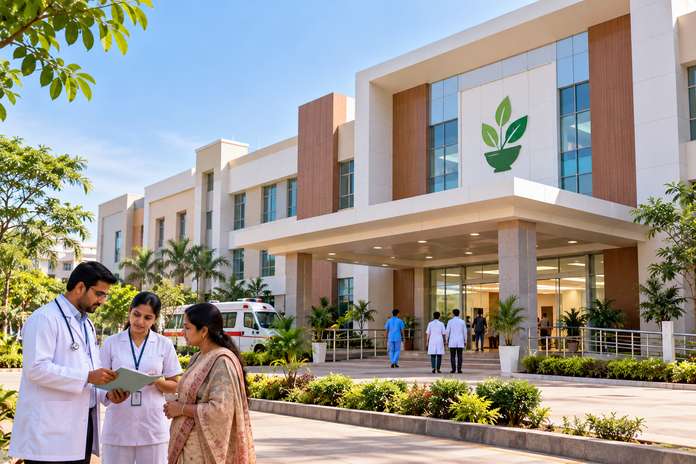
The Andhra Pradesh government has announced an allocation of ₹27 crore for the development of six 50-bed Integrated AYUSH Hospitals and the procurement of medical equipment. The initiative aims to strengthen AYUSH healthcare infrastructure and improve access to traditional systems of medicine across the state.
The funding forms part of a broader programme to upgrade existing hospitals, AYUSH dispensaries and educational institutions. However, the allocation does not necessarily mean that construction has been completed or that the proposed hospitals are operational.
Six Districts to Get Integrated AYUSH Hospitals
The proposed funding will support the establishment of six 50-bed Integrated AYUSH Hospitals and the purchase of required equipment. These facilities are intended to expand the infrastructure available for traditional healthcare services in Andhra Pradesh.
Depending on their approved facilities and services, Integrated AYUSH Hospitals may provide care through systems such as Ayurveda, Yoga and Naturopathy, Unani, Siddha and Homoeopathy.
According to a report published by The New Indian Express in August 2026, the proposed locations are:
- Tekkali: Srikakulam district.
- Rampachodavaram: Polavaram district.
- Nandigama: NTR district.
- Tenali: Guntur district.
- Giddalur: Markapuram district.
- Tirupati: Tirupati district.
The reported locations identify the proposed coverage of the project. However, the individual project estimates and their relationship to the overall ₹27 crore allocation require confirmation from official government documents.
The facilities are expected to supplement existing healthcare infrastructure, but their eventual contribution will depend on construction progress, staffing, equipment availability and operational readiness.
Additional Funding for Existing AYUSH Hospitals
Alongside the proposed hospitals, the state government has announced separate allocations for the development and maintenance of existing facilities.
The reported allocations include:
- Visakhapatnam: ₹4.11 crore for infrastructure and maintenance at an Integrated AYUSH Hospital.
- Kakinada: ₹1.50 crore for hospital infrastructure and maintenance.
These allocations are separate from the ₹27 crore announced for the six proposed hospitals.
Developing new facilities alongside improving existing hospitals could strengthen the state’s AYUSH healthcare network. The practical impact will depend on how the funds are used and whether the institutions have adequate staff, equipment and medicine supplies.
More Than ₹46 Crore for AYUSH Dispensary Upgrades
The state government has also announced more than ₹46.23 crore for upgrading AYUSH dispensaries.
The planned expenditure includes civil works, medical equipment, furniture and digital networking. These improvements could help dispensaries strengthen their infrastructure and administrative capabilities.
The wider announcement also included funding for free medicines and the development of Panchakarma centres. Panchakarma comprises specialised procedures used in Ayurveda, and their suitability depends on individual clinical assessment and the services available at each facility.
NRS Hospital in Vijayawada was also mentioned in connection with an Akshi Tarpana pilot. This traditional Ayurvedic eye-care practice should not be interpreted as an established treatment for every eye condition.
Specific completion dates and operational timelines for these initiatives were not provided in the supplied information.
Investment in AYUSH Education and Specialised Healthcare
The state has also announced funding to strengthen AYUSH educational institutions and specialised healthcare services.
The reported plans include infrastructure support for Ayurveda colleges in Kakinada, Dharmavaram and Vijayawada, along with funding for de-addiction centres and an AYUSH Sports Medicine Centre.
Investment in educational infrastructure could support teaching and training facilities for future healthcare professionals. Specialised centres may also expand the range of services available through government institutions, subject to staffing, operational readiness and applicable standards.
Further information is needed to establish the implementation timelines and the precise scope of each project.
Funding for Welfare and Community Healthcare Programmes
The broader healthcare announcement also included allocations for several welfare programmes:
| Programme | Reported allocation |
|---|---|
| Ayur Vidya | ₹6.5 crore |
| Vayo Mitra | ₹62.40 lakh |
| Specialised Geriatric Care | ₹2.05 crore |
| Supraja prenatal and neonatal services | ₹8.50 lakh |
These allocations are intended to support different areas of healthcare and welfare. The specific services, beneficiaries and geographical coverage of each programme should be confirmed through detailed government guidelines and implementation documents.
Role of the National Ayush Mission
The National Ayush Mission (NAM) is a Centrally Sponsored Scheme through which the Ministry of Ayush supports states and Union Territories in strengthening AYUSH healthcare services and infrastructure.
The scheme provides for assistance towards Integrated AYUSH Hospitals with 10, 30 or 50 beds, subject to applicable guidelines and approved proposals.
State governments and Union Territory administrations play an important role in implementing approved projects, including developing infrastructure and arranging the resources required to deliver healthcare services.
Andhra Pradesh’s announced investment forms part of the wider effort to develop AYUSH healthcare infrastructure. However, the approval status and funding arrangements for individual projects should be verified against official state government documents and relevant National Ayush Mission records.
Why the Investment Matters
The establishment of new hospitals and the upgrading of existing AYUSH facilities could improve access to traditional healthcare services in Andhra Pradesh, particularly in areas where dedicated infrastructure is limited.
Better-equipped institutions may help strengthen service delivery, but construction and equipment procurement alone cannot guarantee improved healthcare outcomes.
Effective implementation also requires qualified healthcare professionals, reliable medicine supplies, appropriate referral systems, quality standards and clear information about available services.
The practical benefits for residents will depend on when the facilities become operational, where they are located and which services they provide.
What Residents Should Know
Residents seeking AYUSH services should contact their district health authorities or the Andhra Pradesh AYUSH department to confirm the availability of facilities in their area.
Before visiting a hospital or dispensary, patients should verify that it is operational and provides the service they require. They should also seek appropriate professional assessment when a condition requires specialist evaluation or emergency care.
The announcement of funding should not be treated as confirmation that all proposed facilities and services are already available.
Conclusion
Andhra Pradesh has announced ₹27 crore for six proposed 50-bed Integrated AYUSH Hospitals, alongside separate funding for existing hospitals, dispensary upgrades, Ayurveda college infrastructure and specialised healthcare programmes.
The investment represents a planned expansion of the state’s AYUSH healthcare infrastructure. Its eventual impact will depend on project execution, the availability of qualified personnel and equipment, and the timely commencement of services.
Further official details on project costs, approvals and completion schedules will help establish the precise scope and progress of the initiative.
Sources:
- Medical Dialogues: Andhra Pradesh Allocates ₹27 Crore for 50-Bed Integrated AYUSH Hospitals Across Six Districts
- The New Indian Express: Andhra Pradesh Government Plans Medical Infrastructure Development
- Press Information Bureau, Ministry of Ayush: Official release
- Ministry of Ayush: Official website