


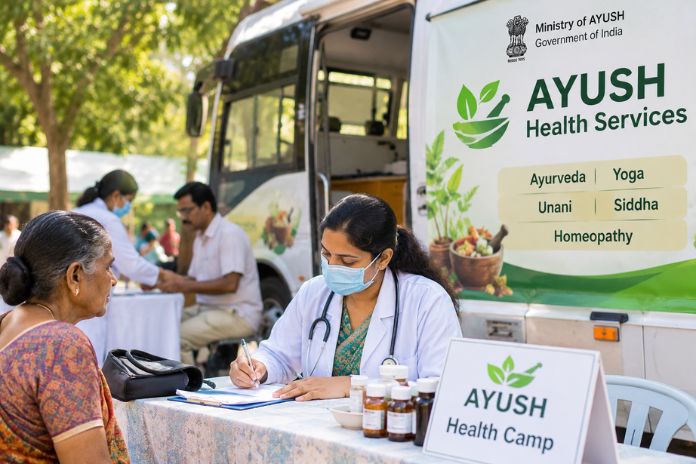
November 5, 2026, New Delhi: The Government of India is continuing efforts for expansion of AYUSH healthcare services through public health facilities like Primary Health Centres (PHCs), Community Health Centres (CHCs) and district hospitals. The initiative aims to improve access to traditional systems of healthcare and wellness by integrating the AYUSH services into the mainstream public healthcare delivery system.
DD News shared a video on how AYUSH services are being expanded across the country for better accessibility to healthcare. Government data released by the Press Information Bureau gives details of the extent of AYUSH integration in public health facilities.
Public Health Care Facility AYUSH Services
One of the strategies under the National Health Mission (NHM) is the integration of AYUSH services in public healthcare institutions. This will allow eligible healthcare facilities to provide AYUSH services alongside other available medical services, so patients can make informed decisions about their care.
According to a Ministry of AYUSH statement as of December 30, 2025, AYUSH services were available in 13,249 health facilities.
Facilities reported included:
- 6,302 Primary Health Centre (PHC)
- 3,191 Community Health Centers (CHC)
- 475 district hospitals
- 3,281 other healthcare facilities
A government statement said 25,322 AYUSH doctors and 5,666 AYUSH paramedics have been deployed in States and Union Territories with funding support under National Rural Health Mission (NRHM).
The present status of AYUSH involvement in India’s public healthcare delivery system is shown in these figures.
National Ayush Mission (Infrastructure & Service Support)
The expansion of AYUSH services is carried out in collaboration between the Ministry of AYUSH and the Ministry of Health and Family Welfare.
Ministry of Health & Family Welfare supports engagement & training of AYUSH Doctors & Paramedical staff under National Health Mission The Ministry of AYUSH’s National Ayush Mission (NAM) provides support for AYUSH medicines, furniture, equipment and infrastructure.
The model of shared responsibility is aimed at promoting the availability of AYUSH services in public health facilities and strengthening the delivery of traditional healthcare systems.
The government has also backed the establishment of Ayushman Arogya Mandir (AYUSH) facilities, formerly called AYUSH Health and Wellness Centres, to provide services based on AYUSH principles and practices.
Community Wellness and Ayushman Arogya Mandir (AYUSH)
The Ayushman Arogya Mandir (AYUSH) facilities are meant for providing preventive, promotive, curative and rehabilitative healthcare through AYUSH systems.
Activities could include Ayurvedic consultations, yoga-based wellness practices, naturopathy-related services, knowledge of medicinal plants and guidance on healthy living, depending upon the services offered by a particular centre.
The programme is designed to bring healthcare and wellness services closer to communities, including those in rural and underserved areas.
The Ministry of AYUSH has approved 12,500 existing AYUSH dispensaries and sub centres for up-gradation to AYUSH Health and Wellness Centres under the National Ayush Mission which was later renamed as Ayushman Arogya Mandir (AYUSH). The number actually functioning in each State/UT varies and should be verified with the latest official data.
Access and Informed Choice
“Integrating AYUSH services in public health facilities can provide more healthcare options to patients within the public health system. The government has stated objectives to promote holistic wellness, self-care and to provide AYUSH services through a team based approach.
Availability of services to patients will depend on the facilities, qualified personnel, medicines and other resources available at each individual centre.
Integration of AYUSH systems should also be accompanied with appropriate clinical assessment, referral arrangements and adherence to the applicable professional and regulatory standards. If you have an acute or serious medical condition, you should be assessed and treated promptly according to your need.
3. Interaction Between the Centre and the States
AYUSH services need to be expanded in coordination with Union Government and State and Union Territory Administrations. State governments play a major role in planning, staffing and implementing healthcare programmes, with the local needs and approved annual action plans.
The Ministry of AYUSH has also emphasised on institutional development and integration of traditional healthcare systems with wider healthcare system.
“It will be important to continue monitoring staffing, infrastructure, service availability and patient access to gauge the reach of these programmes.