


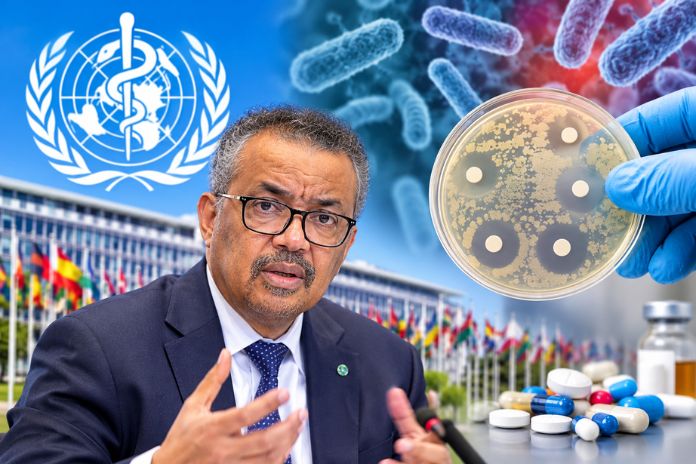
Antimicrobial Resistance: WHO Warns of Escalating Global Health Threat
Antimicrobial resistance (AMR) is emerging as one of the most serious challenges in modern health care. In 2023, the World Health Organization (WHO) said around one in six lab-confirmed bacterial infections globally was resistant to antibiotic treatment. The updated fact sheet, released 16 July 2026, points to the growing threat and calls for coordinated action across human health, animal health, agriculture and the environment.
What is antimicrobial resistance?
Antimicrobial resistance (AMR) occurs when microorganisms (such as bacteria, fungi, parasites, or viruses) change in ways that reduce or eliminate the effectiveness of drugs designed to treat infections.
Antimicrobial resistance happens when microorganisms such as bacteria, viruses, fungi and parasites become resistant to medicines that are used to control or kill them, enabling them to survive or multiply.
Antimicrobial drugs include:
- Antibiotics: To treat bacterial infections.
- Antivirals: Used for viral infections.
- Antifungals: Used to treat infections caused by fungus.
- Anti-parasitics: Used to treat parasitic infections.
If these drugs are not as effective, infections may be difficult to treat, resulting in a greater risk of complications, prolonged illness and death.
The important difference is that the resistance develops in the microorganisms, not in the human body.
WHO points to rising global burden
WHO considers AMR a major threat to global health and development. The July 2026 fact sheet presents several important findings:
- In 2023, one in six laboratory-confirmed bacterial infections worldwide was antibiotic-resistant.
- Bacterial AMR was associated with more than 4.7 million deaths worldwide in 2021.
- In more than 40% of pathogen-antibiotic combinations studied, resistance increased between 2018 and 2023.
- These combinations are estimated to have a mean annual increase of 5-15%.
Resistance was especially high in the WHO South-East Asia and Eastern Mediterranean regions, where around one in three reported infections were resistant to antibiotics.
These figures highlight the need to improve infection prevention, laboratory diagnosis, responsible use of medicines and public awareness. The estimates are for different reporting periods and should not be interpreted as estimates for the same year.
Why is resistance to antimicrobials increasing?
AMR develops naturally over time but a number of human activities accelerate its development and spread.
1. Antibiotic misuse and abuse
Taking antibiotics when they are not needed, or using the wrong medicines, or using them without proper medical advice, can help resistant bacteria to survive and multiply.
Antibiotics do not work against viral infections like the common cold or flu.
2. Incomplete or improper treatment
Incorrect dosing, incorrect treatment duration and non-compliance to the professional instructions can compromise the treatment. Patients must follow the directions of the prescribing healthcare professional and not change or stop medications on their own.
3. Lack of infection control
Resistant microorganisms are spread because of inadequate sanitation, unsafe water, poor hygiene and insufficient infection-control measures.
4. Antimicrobial use in animals and agriculture
Antimicrobial use in livestock, food production and agricultural systems can promote resistance. Food chains and the environment can be transmission routes for resistant microorganisms and antimicrobial residues.
5. Limited access to diagnosis and medicine
Poor laboratory facilities, delays in diagnosis and unequal access to suitable medicines may result in inappropriate treatment and poor management of infection.
Another major concern is the lack of development of new antimicrobial medicines, WHO notes.
What are the effects of AMR on human health?
AMR can make common infections harder to treat and limit the options available to healthcare professionals.
Its consequences are:
- Increased risk of serious illness and complications.
- Increased healthcare costs and length of hospitalisation.
- increased dependence on second-line or alternative drugs.
- Greater risk of surgery and cancer treatment.
- Increased difficulty in controlling infections in vulnerable populations.
Drug resistance is not just a bacterial problem. The WHO also notes resistance involving fungi, viruses and parasites, including concerns relating to HIV, influenza, malaria and certain fungal infections.
India’s response: National Action Plan on AMR 2.0
India has identified antimicrobial resistance as a multisectoral public-health challenge.
On 18 November 2025, the Ministry of Health and Family Welfare launched the National Action Plan on Antimicrobial Resistance 2.0 (NAP-AMR 2025–2029).
The new plan is based on a One Health approach that recognises the interdependence of human health, animal health, agriculture and environmental health.
The Government of India said the plan also has sector-specific action plans, defined timelines and budgets and mechanisms for coordination amongst participating ministries and departments.
Its main actions are on:
- Enhancement of public awareness, education and professional training.
- Strengthening laboratory capacity and AMR surveillance.
- Enhancing infection prevention and control in health care settings.
- Encourage the judicious use of antimicrobials.
- Facilitating research, innovation and intersectoral collaboration.
The plan is part of India’s ongoing efforts to improve coordinated action against drug resistance. Its implementation and monitoring are essential to achieve its intended results.
Press Information Bureau+2.
The One Health Approach and Why it Matters to Collaborate
WHO is calling for a One Health approach. Human health is intrinsically linked to the health of animals, plants and ecosystems.
This approach promotes cooperation among:
- Humans, healthcare professionals and hospitals.
- Veterinary professionals and institutions for animal health.
- Food production and agricultural industries.
- Environmental and sanitation authorities.
- Researchers, policymakers and public health organisations .
Stopping AMR will require more than just new medicines. It also needs prevention of infections, improvement of sanitation, expansion of vaccination, strengthening of diagnostic facilities and responsible use of antimicrobials.
What can people do to prevent AMR?
Everyone has a role to play in fighting antimicrobial resistance.
Practical steps for the citizens:
- Only use antibiotics when prescribed by a qualified healthcare professional.
- Do not use leftover antibiotics or medicines prescribed to someone else.
- Observe the indicated dosage and treatment instructions.
- Don’t ask for antibiotics for viral infections like colds and flu.
- Wash your hands and practise personal hygiene regularly.
- Adhere to the vaccination schedule.
- Ensure you have clean drinking water, safe food handling, and good sanitation.
- Do not share antimicrobial medicines or purchase them yourself.
Health care providers can help through appropriate prescribing, infection control practices, diagnostic testing and antimicrobial stewardship.
Ayurveda and Antimicrobial Resistance: Need for Scientific Evaluation
AMR is also a very important topic to be discussed in Ayurveda and other traditional systems of medicine.
IS THEIR ANY ALTERNATIVE POSSIBLE?
Ayurvedic literature is rich in medicinal plants and formulations with traditionally accepted uses. Laboratory and preclinical studies have investigated antimicrobial properties of some plant derived substances.
However, antimicrobial activity in laboratory tests does not demonstrate that a formulation will be safe and effective for treating drug-resistant infections in humans.
Further, more rigorous research is needed to assess safety, efficacy, dosage, interactions, standardisation and clinical outcomes.
Appropriate diagnosis, prescribed antimicrobial treatment or evidence based infection management should not be replaced but Ayurveda should be explored with scientifically sound research. If you think you have an infection, get qualified medical care.
Why This Development Is Important
Antimicrobial resistance jeopardises the effectiveness of medicines needed by health systems to treat infections and to perform vital medical procedures.
The WHO findings emphasise the need for coordinated public-health policies, responsible prescribing, and research and innovation. India’s NAP-AMR 2.0 offers a national framework to tackle the challenge across multiple sectors.
AMR is no longer optional for healthcare professionals, researchers, students and citizens to be aware of. And it’s an important part of keeping current and future therapies effective.”
To put it simply,
Antimicrobial resistance is an increasing global health threat that requires collective responsibility. WHO’s new assessment emphasises the need to strengthen infection prevention, responsible medicine use, surveillance and research.
The National Action Plan on AMR 2.0 of India is an important policy framework for coordinated national action. Sustained implementation, scientific research and public participation will be key to maintain the effectiveness of antimicrobial medicines for future generations.
SOURCE LINK: WHO – Antimicrobial resistance